HONDA CRV 2013 AutoCars Honda Civic | Honda Accord, Honda City, Honda Brio, Honda Amaze, Honda odyssey, Honda Assure, Honda Auto Terrace, Honda Customer Jazz, New Honda Cars in United States/America/USA, Canada, United Kingdom, France, Germany, Spain, Italy, India, Japan

Showing posts with label Japan Disaster. Show all posts

Honda Cars : Harley Davidson Motorcycle Washed up in B.C. is Japanese Tsunami Debris | 2013 New Honda Car Reviews 0

Unknown | 6:50 AM
Japan Disaster
Japan Disaster

 
An estimated 1.5 million tons of flotsam believed to be headed to Canada

CBC News - Posted: Apr 29, 2012 5:53 PM PT Last Updated: Apr 29, 2012 5:50 PM PT

A beachcomber on British Columbia's Haida Gwaii islands has discovered what may be the first piece of debris from the Japanese tsunami to arrive in Canada.

Peter Mark was riding his ATV, exploring an isolated beach on Graham Island on April 18, when he made a spectacular find.

"You just never know what you're going to stumble upon when you go for a drive, and lo and behold you just come across something that's out of this world," he said.

Mark found a large white cube, like the back part of a moving truck, just below the high tide mark.

"The door was ripped off it and I could see a motorcycle tire sticking out," he said. "So I went closer and looked inside and saw a Harley-Davidson motorcycle."

The bike was rusty, particularly on the wheels and handlebars, but the logo on the fuel tank was unmistakable.

"First I thought, this has got to be the craziest thing anyone has ever found," he said.

"Then I looked a little closer and the license had Japanese writing on it. The wall of the trailer had Japanese print on the tags. And the first thing that popped into my head was this is likely from the Tsunami in Japan."

The motorcycle's licence plate shows it was registered in Miyagi Prefecture, and writing on the container matches photos of a commonly used Japanese moving van.

Mark also found a few golf clubs, tools and camping equipment in the container.

"It defies all logic," he said. "I cannot for the life of me figure out how that stuff stayed in there. The motorcycle was not strapped down. Everything was just laying loose on the bottom of the floor."

'Quite an eerie feeling'

Miyagi Prefecture was the worst hit part of Japan, with more than 11,000 people dead and missing. Video taken at the time of the tsunami shows numerous white trucks, similar to the cube that washed up on Haida Gwaii, getting washed away.

The Kuroshio ocean current runs in an almost direct path from Japan's east coast over to North America, passing right by the islands of Haida Gwaii.

Mark said seeing someone's possessions wash up on a beach 5,000 kilometres away was incredibly sobering.

"I gotta say, the first thing that popped into my mind when I was looking at the scene [was] I really wonder what happened to this person. I really hope this person is OK," he said. "It's quite a shock to actually see it and to actually walk into it … [It's] quite an eerie feeling, knowing what happened to Japan and to those people. It kind of hits home quite a bit."

The beach where the motorcycle washed up is remote — getting there requires an off-road vehicle and crossing several rivers — which is partly why Mark left everything where he found it.

"I think the most important thing is that people treat the things they find with respect," he said. "These are parts of people's lives. Some people lost everything in the disaster, and I think people have to keep that in mind when they make a find like this."

The Japanese consulate in Vancouver has the licence plate number and is trying to determine who owned the items — and whether that person is still alive.

"In many cases, I believe the original owners will welcome reuniting with their lost objects," said Hideki Ito, Japan's consul general in Vancouver.

Ito expects discoveries of personal items in the debris will be extremely rare, as most larger items will sink.

More than 1.5 million tonnes of tsunami debris is drifting across the Pacific Ocean toward Canada's West Coast, but until now only bottles, buoys and other small items have washed ashore.

Source (via www.autoblog.com);
http://www.liveleak.com/view?i=ccc_1335772866


, , , ,

Honda Cars : Honda Statement on the first anniversary of the Great East Japan Earthquake | 2013 New Honda Car Reviews 0

Unknown | 6:54 AM
Japan Disaster
Japan Disaster

Thank you for your continuous understanding and support for Honda's activities.

One year has passed since the Great East Japan Earthquake that occurred on March 11, 2011. Honda would like to express its deepest sympathy and condolences to the victims of the disaster and our sincere hopes for the earliest possible reconstruction of the affected areas.

Despite the fact that we caused our customers some inconvenience during the past year due to the impact of the earthquake, such as delays in the delivery of some new products, we received a great outpouring of support and heartwarming messages from our friends and customers inside and outside of Japan. For this we are extremely grateful.

Honda would like to contribute to the earliest possible reconstruction of the affected areas by continuing our support activities and by dedicating ourselves to continue delivering products and services that please our customers.

In Europe, Honda have set challenging plans to achieve complete recovery as shown by the 2011 launch of the new Civic and seven all new motorcycle models. Furthermore, we are recruiting 500 new employees at our European manufacturing facility to support the Autumn launch of our all new European CR-V.

We appreciate your continuous support for our activities.

11 March, 2012
Ken Keir,
Executive Vice President, Honda Motor Europe

Source;
http://www.hondanews.eu/en/news/index.pmode/modul,detail,0,2204-DEFAULT,21,text,1/index.pmode


, , , , , , ,

Honda Cars : Dramatic unseen footage of Japanese tsunami | 2013 New Honda Car Reviews 0

Unknown | 6:27 AM
Japan Disaster
Japan Disaster

Wow....

source;
www.autoblog.com


, , ,

Honda Cars : Honda Prays for Disaster-Free U.S. Rebound Led by New Models | 2013 New Honda Car Reviews 0

Unknown | 7:43 AM
Japan Disaster
Japan Disaster

By Alan Ohnsman
Dec. 5 (Bloomberg) -- Honda Motor Co. says replenished vehicle inventory and new Honda and Acura models planned for the next 24 months will spur a U.S. sales rebound next year after natural disasters dashed its 2011 goals.

Honda’s loss of some North American output in October and November due to parts shortages caused by floods in Thailand led to it being the only large automaker to post a U.S. sales decline last month as total sales jumped 14 percent. That came after six months of declines resulting from reduced auto inventory triggered by Japan’s March earthquake and tsunami.

“I’m going to the shrine to pray to avoid any more such disasters from Mother Nature,” Tetsuo Iwamura, Honda’s top North American executive, said in an interview on Dec. 2 in Las Vegas. “Next year, even starting this month, we’ll recover.”

Japan’s third-largest automaker counts on the U.S. for the largest portion of its global sales. Tight inventory and competition from Ford Motor Co., Hyundai Motor Co. and Kia Motors Corp. and others cut Tokyo-based Honda’s U.S. sales 5.3 percent through November.

While Honda’s market share has fallen to 9 percent from 10.5 percent so far in 2011, combined share for South Korean affiliates Hyundai and Kia rose to 9 percent from 7.8 percent a year ago.

“It is a year to forget, and then push the reset button,” said Rebecca Lindland, an analyst with researcher IHS Automotive. “We’re now seeing heavy replacement demand, so there is a lot of sales opportunity out there.”

IHS Automotive estimates U.S. sales of new cars and trucks will rise to about 13.7 million units in 2012, from about 12.7 million this year, she said.

‘Outrageous’ Competition

“The competition is outrageous and it’s coming from every part of the market,” Lindland said. “Every year we say this is an incredibly competitive market, but this year we mean it.”

Honda’s immediate goal is to boost production of its new Civic compact and CR-V compact sport-utility vehicle that goes on sale this month, Iwamura said. The company starts December with about a 40-day supply of vehicles, he said.

“Unfortunately, our competitors didn’t show us any mercy,” Iwamura said. “They took as much market share from us as they could. That’s the reality of the market. You have to fight back.”

In 2012, the company releases a revamped Accord, Honda’s top-selling U.S. nameplate, and other models Iwamura declined to identify. “Fortunately, we are going to have lots more models in the next 24 months,” he said.

New Engines, Hybrids

Vehicles coming out next year will also begin powered by new four- and six-cylinder engines and transmissions Honda unveiled last week at the Tokyo Motor Show, claiming they will lead the industry in fuel efficiency.

The company also will add new hybrid models from next year that will boost its reputation for fuel-efficiency and advanced technology, he said.

“New models with good technology, yet very value-oriented pricing for the sake of competitiveness,” said Iwamura, 60. “That is our key for a successful year in 2012 and onwards.”

Sales of the new Civic, released this year, will continue to increase and haven’t really been hurt by some critical reviews, he said.

“In November, Civic was the number one selling compact vehicle,” Iwamura said. “Customers still believe in the Civic.”

The 2012 Civic failed to receive the “recommended” status from Consumer Reports magazine. The revamped model “ranks near the bottom of its category,” David Champion, senior director of the magazine’s auto test center, said in an Aug. 1 e-mailed statement.

Honda’s U.S. headquarters are based in Torrance, California. The company’s American depositary receipts rose 0.3 percent to $31.59 at 9:35 a.m. New York time.

Source;
http://www.businessweek.com/news/2011-12-05/honda-prays-for-disaster-free-u-s-rebound-led-by-new-models.html


, , , , , , , , , , ,

Honda Cars : Honda cranks up output as auto sector sees comeback | 2013 New Honda Car Reviews 0

Unknown | 7:10 AM
Japan Disaster
Japan Disaster

The engine of the Ontario economy is starting to hum again, propelled mainly by a return to full production at Japanese auto makers’ plants.

Honda of Canada Manufacturing (HMC-N30.00-0.67-2.18%) in Alliston, Ont., said Wednesday that it will begin cranking out 1,600 vehicles a day in November, more than two years after it cut production during the recession and about eight months after it slashed output because of disruptions caused by the March 11 earthquake in Japan.

The two Honda plants in Alliston, located about 90 kilometres north of Toronto, will also operate on two Saturdays a month – likely until at least the end of the year – mainly to build more models of the compact Civic. The top-selling passenger car was redesigned for the 2012 model year, and production and sales were just starting to gear up when the earthquake created chaos in the supply chain and made it difficult for auto makers to get enough parts.

Honda’s move means that two-thirds of Canada’s car and light truck assembly plants will be running on overtime. That’s a major boost for a Canadian economy still in the midst of an anemic recovery from the recession and one in which gross domestic product fell by 0.4 per cent in the second quarter.

“The key point is that auto production did slow significantly in the summer and it did affect the overall economy, but now it is back in full swing,” said Carlos Gomes, a Bank of Nova Scotia economist who follows the auto industry closely.

There were signs in September that the worst had passed, noted industry analyst Dennis DesRosiers, president of DesRosiers Automotive Consultants Inc., of Richmond Hill, Ont.

Car production at Toyota Motor Manufacturing Canada Inc. (TM-N66.91-0.43-0.64%) in Cambridge, Ont., rose 19 per cent that month from year-earlier levels, Mr. DesRosiers said, compared with a 6.2-per-cent decline in the first nine months of the year.

Since then, Toyota’s other plant in Woodstock, Ont., has returned to a full, two-shift operation and is also working overtime to boost output of the RAV4 crossover.

Nonetheless, when compared with vehicle production in the United States and Mexico, “we’ve been the laggard all year and remained so in September,” Mr. DesRosiers said.

While the assembly industry is located entirely in Ontario and most of the supply base is in that province as well, the production rebound will also contribute to national economic growth, Mr. Gomes said.

The rebound will add almost a full percentage point to the annual growth rate in the fourth quarter, he said. His forecast is that the economy will grow by 1.2 per cent this quarter.

Japan-based auto makers want to increase their inventories, which stood at just 40 days of supply in the U.S. market in September, compared with the usual figure of about 60 days. In addition, U.S. sales jumped by a surprising 10 per cent in September. That means all auto makers want to make sure they have enough vehicles on U.S. dealers’ lots in the fourth quarter.

The U.S. market is the destination for 80 per cent of the Civics, Acura MDX and ZDX models that roll off the Alliston assembly lines.

The shortage of Civics since March means there are several thousand back orders for the car at Canadian dealerships, Jerry Chenkin, executive vice-president of Honda Canada Inc. told reporters at the Alliston plant on Wednesday. Some customers have been waiting as long as 45 days, he said, but the increase in production should cut that to 30 days.

The Civic has been the best-selling passenger car in Canada for the past 13 years and led the second-place Hyundai Elantra by 1,122 vehicles at the end of September, despite a 12-per-cent sales decline in the first nine months of 2011.

Source;
http://www.theglobeandmail.com/globe-investor/honda-cranks-up-output-as-auto-sector-sees-comeback/article2206417/


, , , , , , , ,

Honda Cars : Japan's plants hum, but hurdles remain | 2013 New Honda Car Reviews 0

Unknown | 6:43 AM
Japan Disaster
Japan Disaster


By Hans Greimel
TOKYO -- Playing a frantic game of catch-up, Japan's automakers are running assembly plants at a pace faster than pre-earthquake schedules in order to boost inventories and recoup sales.

Toyota and Nissan are leading the surge, with output in Japan not only back to normal but exceeding year-ago levels. Mazda and Suzuki have reported their first year-over-year production increases since the March 11 quake, and Honda, Subaru and Mitsubishi are close behind.

But even as the companies return to full domestic output, big hurdles remain.

Some model variants are still in limited production because of lingering shortages of parts, especially microcontrollers. And even with output restored, it could take months for carmakers to rebuild prequake inventory levels, especially at U.S. dealerships.

Suppliers may struggle to keep pace with the surge. And automakers are rejiggering supply chains so they won't get burned again.

They are racing to find multiple sources for parts; tighten control over lower-tier suppliers; buy more parts overseas; and even bolster stockpiles, an abrupt change from Japan's treasured just-in-time approach.

Building inventories
Toyota is among the most aggressive in its supplier overhaul.

"We have instructed them to have a plan that allows them to go back to normal operations within two weeks of a major disaster," Shinichi Sasaki, Toyota Motor Corp.'s executive vice president for global purchasing, told Automotive News.

Toyota's domestic output rose 12 percent in August -- its first year-over-year increase since the earthquake. But it does not expect normal U.S. inventories until March.

Nissan's domestic production actually edged ahead of last year's in May. But not even Nissan says it can make all the car variants it wants. Because of pinched pipelines for some microcontrollers, the small computer chips that control everything from engines to entertainment systems, Nissan does not expect to return to unrestricted production until later this month.

Subaru says its Japan plant will be back to normal by the end of October. But it will take until March for the brand to achieve prequake U.S. inventory levels, especially for Japan-made models such as the Forester SUV and Impreza sedan.

Chips still down
Output of most models at Honda is almost back to normal. But it is still facing shortages of the redesigned Civic in the United States and the Brio small car for Asia. Because those cars were introduced after the quake, Honda couldn't stockpile enough microchips. Civic production should return to normal by the end of this month, and U.S. inventories of the model are expected to be restored by late November.

Nissan spokesman Toshitake Inoshita said: "In terms of raw production numbers, we have more than full production. But we are still waiting on some electronic chips."

Chip maker Renesas Electronics Corp. of Tokyo remains a bottleneck, but that will ease soon. The supplier, which controls about 41 percent of the global market for automotive microcontrollers, returned to prequake output at the end of September, spokeswoman Kyoko Okamoto said. That means a normal flow of chips will start to reach automakers this month.

But Renesas is far from recovered. It recouped prequake output by shifting work from its damaged Naka factory in Japan's quake zone to chip foundries in Singapore and Taiwan. The Naka factory is still limping along at just over half its prequake capacity. Until the factory is fully restored, it may be hard for Renesas to meet increased demand as automakers ramp up.
Masaya Yamashita, Honda Motor Co.'s global purchasing boss, says: "In order to supply to the carmakers, I think Tier 1 suppliers are really struggling to make deliveries to all of us. The parts are reaching us. But the inventory of parts in the chain is pretty tight."

The pinch has Toyota revising its famous low-inventory, just-in-time production system.

Normally, Toyota carries a two-month inventory of Renesas chips, global procurement chief Sasaki says. But it will raise that figure to as high as four months.

"Right now we are recalculating the optimal volume of inventory that is necessary based on our estimate of how long it will take production at our suppliers to resume after a disaster," he said.

Another new norm: paternalistic big-footing of lower-tier suppliers, a practice previously all but unknown.

Take Nippon Chemi-Con Corp., a maker of aluminum foil for electrolytic capacitors for the electrical system. Its factory was wiped out.

Toyota, which is accustomed to working intimately with Tier 1 and 2 suppliers, decided to get active with lower-tier suppliers that had been flying far below the radar. But when Toyota stepped in to help Nippon Chemi-Con, the industry supplier rebuffed Toyota as an interloper, according to an internal Toyota report reviewed by Automotive News.

Only after weeks of arm-twisting by did the supplier acquiesce to Toyota's help in pumping out 700 tons of liquid waste that had flooded the factory.

Paint battle
Toyota also butted heads with pigment maker Merck, which makes a pearl luster pigment called Xirallic. Merck's kilns in Onahama, Japan, were damaged and unable to supply the pigment, which is a component in many paint colors and is used in about 20 percent of Toyota's vehicles.

Merck rejected Toyota's offers of assistance, according to the Toyota report. So Toyota tried making its own pigments -- with mixed results. Of 67 missing colors, Toyota could successfully substitute only 37.

That was enough to tide Toyota over while Merck recovered. But Sasaki said Toyota asked Merck to establish a backup production site in Germany, the supplier's home country. Merck agreed.

Expect all automakers to keep lower-tier suppliers on a tight leash. Toyota, Nissan and Honda are demanding more control over where suppliers get their components.

"The parts and materials that remained the biggest issues for the longest time after the earthquake aren't the parts that we buy, but the parts or materials that the Tier 1 or Tier 2 suppliers buy," says Honda's Yamashita. When possible, he says, "we want to have dual sources."

Bouncing back
Change in monthly production in Japan, vs. 2010

April June Aug.

Toyota
–75% –13% 12%
Nissan
–49% 2% –3%
Honda
–81% –51% –17%

Source (via Carscoop);
http://www.autonews.com/apps/pbcs.dll/article?AID=/20111010/OEM01/310109970/1117


, , , , , , , ,

Honda Cars : Toyota-Honda U.S. Rebound Brings Call of ‘What Recession?': Cars | 2013 New Honda Car Reviews 0

Unknown | 7:25 AM
Japan Disaster
Japan Disaster

Sept. 30 (Bloomberg) -- Toyota Motor Corp. and Honda Motor Co.'s return to full production this month is boosting U.S. auto sales back near the pace reached before Japan's earthquake.

September light-vehicle sales, to be released Oct. 3, probably rose to a 12.8 million seasonally adjusted annual rate, the average estimate of 14 analysts surveyed by Bloomberg. That would be the fastest pace since April, when lost output caused by Japan's tsunami crimped supply of parts and finished cars.

“Recovering inventory levels have helped to bring buyers back into the market,” said Jeff Schuster, executive director of global forecasting at J.D. Power & Associates.

Jesse Toprak, who develops forecasts at TrueCar.com, went so far as to title his latest report “What Recession?” as the auto rebound defies consumer confidence that is near a two-year low.

Toyota has said it expects to reverse monthly U.S. sales declines beginning next month, and Honda is adding overtime shifts at two Ohio plants. Better supply also probably meant incentives rose from the lowest in almost six years.

“The big story this month was better inventory and favorable pricing” for consumers, said Jessica Caldwell, an analyst at Santa Monica, California-based Edmunds.com.

Sales declines at Toyota and Honda contributed to the U.S. auto sales pace slowing from a 13.1 million rate averaged in the year's first four months to as low as 11.6 million in June, according to researcher Autodata Corp.

Toyota Still Recovering
Toyota slipped behind Ford Motor Co. to third in U.S. sales this year through August, which was the first month in the past year that its global production increased. The Toyota City, Japan-based automaker is still recovering and may say sales dropped 15 percent, the average estimate of five analysts surveyed by Bloomberg, leaving it in third again.

“With the launch of the new Camry, October should be even better,” said Paul Atkinson, who operates Toyota dealerships in Bryan and Madisonville, Texas. “We're selling as fast as they're coming off the damn truck.”

Toyota, ramping up production of the redesigned Camry sedan, may say sales dropped 15 percent, the average estimate of five analysts surveyed by Bloomberg. The Toyota City, Japan- based automaker's global production increased for the first time in 12 months in August.

Toyota shares fell 0.5 percent to 2,688 yen in Tokyo at the 3 p.m. close of Tokyo trading. Nissan Motor Co. gained 0.4 percent, while Honda fell 1.4 percent.

Overtime at Honda
Sales may decline 6.1 percent at Honda, the average of five analysts' estimates, after deliveries slid 20 percent or more in each of the past four months. The Tokyo-based automaker is scheduling overtime shifts at its Marysville and East Liberty assembly plants in Ohio, Ron Lietzke, a spokesman, said in a Sept. 28 phone interview.

Honda began the month with 32 days supply of vehicles, from 28 in August, Westlake Village, California-based J.D. Power said in a Sept. 22 statement. The industry standard is about 60 days.

General Motors Co. and Ford are anticipating that demand will keep increasing as the largest U.S. automakers negotiate labor contracts that boost production and add jobs.

GM, which reached a new four-year contract with the United Auto Workers this month, may report a 19 percent increase in September sales, the average of eight analysts' estimates. The Detroit-based automaker and union said the accord adds or retains 6,400 jobs and reopens an assembly plant in Tennessee.

Ford, Chrysler
Ford has discussed with the UAW adding as many as 10,000 union jobs in the U.S., according to three people familiar with the talks. Some of those workers would assemble Fusion sedans, which are currently made in Mexico, said one of the people who asked not to be identified because the negotiations are private.

Deliveries this month may rise 5.9 percent for Dearborn, Michigan-based Ford, the average of eight analysts' estimates.

Sales at Fiat SpA-controlled Chrysler Group LLC, which has extended its UAW contract to Oct. 19, may climb 20 percent, the average of seven analysts' estimates.

GM fell 58 cents, or 2.8 percent, to $20.18 at 4 p.m. in New York Stock Exchange composite trading. Ford dropped 33 cents, or 3.3 percent, to $9.67.

Confidence among U.S. consumers stagnated in September near a two-year low as the share of households saying it was difficult to find a job climbed to the highest level in almost three decades. The Conference Board's sentiment index increased by 0.2 to 45.4 from an August reading that was the lowest since April 2009, the New York-based researcher said Sept. 27.

Auto Industry Shrinks
“The economy is stopped dead in its tracks,” George Magliano, a New York-based economist at IHS Automotive, said in a phone interview. “Considering that, the auto business is showing pretty good strength. The industry is hiring, it's producing more and there's pent-up demand.”
GM and Ford will be adding back only a portion of the jobs they shed during the recession that sent auto sales to a 27-year low of 10.4 million in 2009, according to Autodata Corp.

GM had about 49,000 U.S. hourly employees at the end of 2010, a year after its U.S.-backed bankruptcy. That's down from 111,000 such workers at the end of 2005, the company said in a Sept. 28 conference call with analysts.

Last year, about 962,000 U.S. workers were employed making vehicles and parts, according to the Bureau of Labor Statistics in Washington. That's down 32 percent from 1.41 million in 2005.

The downsizing of the industry, achieved in part by U.S.- backed bankruptcies for GM and Chrysler, meant cutting production capacity. That prevented U.S. automakers from raising output and offsetting industrywide constraints on inventory after the Japan earthquake and tsunami in March, said Alan Baum, an industry consultant at Baum & Associates.

‘Limited Ability'
GM, Ford and Chrysler “had a fairly limited ability to capitalize because there are a lot fewer auto plants and workers than there were four years ago,” said Baum, who is based in West Bloomfield, Michigan. “You can't just add a shift willy- nilly.”

Nissan, whose better supply of parts has buoyed inventory levels above its Japan-based rivals, may say deliveries climbed 18 percent, the average of five analysts' estimates.

Hyundai Motor Co., South Korea's largest automaker, and its affiliate Kia Motors Corp., may combine to sell 20 percent more vehicles than a year earlier, according to the average of three estimates. Both automakers are based in Seoul.

J.D. Power today increased its estimate for the September auto-sales rate to 13 million from 12.9 million.

Industrywide deliveries may rise to 12.7 million cars and light trucks this year, the average of 18 analysts' estimates surveyed by Bloomberg in August. Sales may climb to 13.6 million in 2012, the average of 15 estimates. The U.S. averaged annual sales of 16.8 million vehicles from 2000 to 2007, according to Woodcliff Lake, New Jersey-based Autodata.

The following table shows estimates for car and light-truck sales in the U.S. Estimates for companies are a percentage change from September 2010. Forecasts for the seasonally adjusted annual rate, or SAAR, are in millions of light vehicles.

September had 25 selling days, matching the year-earlier period.*T

GM Ford Chrysler SAAR
Himanshu Patel NA NA NA 12.8
(JPMorgan)
Rod Lache 21% 8.5% 22% 13.0
(Deutsche Bank)
Chris Ceraso 14% 4% 16% 12.6
(Credit Suisse)
Brian Johnson 17% 7% 25% 12.8
(Barclays)
Peter Nesvold 24% 1.6% NA 12.7
(Jefferies)
Patrick Archambault 15% -1.3% 13% 12.4
(Goldman Sachs)
Itay Michaeli NA NA NA 12.9
(Citigroup)
Adam Jonas NA NA NA 12.8
(Morgan Stanley)
George Magliano NA NA NA 12.4
(IHS Automotive)
Jeff Schuster NA NA NA 13.0
(J.D. Power)
Jessica Caldwell 19% 11% 23% 12.9
(Edmunds.com)
Jesse Toprak 21% 8.5% 20% 13.1
(TrueCar.com)
Alan Baum NA NA NA 12.8
(Baum & Associates)
Seth Weber 21% 8% 24% 12.8
(RBC)
Average 19% 5.9% 20% 12.8
*T
--Editors: Bill Koenig, Jamie Butters

Source;
http://news.businessweek.com/article.asp?documentKey=1376-LS9L3G1A1I4H01-31KL3EA80KPOTH5QSRJ96RFGAM

, , , , , , , , , , ,

Honda Cars : Honda denies nuclear mission for robot | 2013 New Honda Car Reviews 0

Unknown | 8:36 AM
Japan Disaster
Japan Disaster

There was a report that Honda was going to outfit ASIMO with a few upgrades to help out in the disaster in Japan;

http://gizmodo.com/5830373/hondas-most-adorable-robot-is-about-to-go-nuclear

TOKYO — Japan's Honda has denied a press report it is hoping to retool its humanoid robot ASIMO to enable it to join emergency work inside the crippled Fukushima Daiichi nuclear power plant.


The Japanese newspaper Asahi Shimbun said in its Friday evening edition that Honda was aiming to upgrade the robot's upper body functions so that it can move its arms as smoothly as a human being.


US Honda spokeswoman Lauren Ebner said the report was "speculation."


"Although Honda hopes that ASIMO will someday be a helper to people, at this point the robot is solely a research and design project," Ebner said in a statement to AFP.


No official at Honda's head office in Tokyo was available for comment on Friday.


The current ASIMO, introduced in 2000 and resembling a small astronaut, stands 130 centimetres (4 feet 3 inches) tall. The bipedal bot can walk, run, carry trays, push carts and shake hands with people.


Asahi said that to work in the debris-strewn nuclear plant, ASIMO would likely be modified and fitted with tyres or caterpillar tracks.


The Fukushima plant has been leaking radiation from its reactors since its cooling systems were knocked out by the March 11 earthquake and tsunami. At some hotspots radiation is high enough to be lethal to humans.


Robots have already been used inside the plant to take video footage, including the US-made PackBot and Japanese-made Quince crawler robots.


Source;

http://www.google.com/hostednews/afp/article/ALeqM5g7m9qLNugC96cUAu4BGNJPVA8Dxg?docId=CNG.1cc437d7d61fc59f3394a87a1a28abbb.171


, , , , , , , ,

Honda Cars : Honda and Toyota: Getting Back on Track | 2013 New Honda Car Reviews 0

Unknown | 6:43 AM
Japan Disaster
Japan Disaster

This year hasn’t been the kindest to Japanese automakers Honda and Toyota. The devastation wrought by March’s earthquake and Tsunami in Japan, resulted in severe disruptions to their supply chains, causing dealer inventories to run low and other automakers to gain ground in sales.


However, after a dismal July, there are signs that both Honda and Toyota are gaining momentum; supply from Japan has improved, while factories in North America are running in overdrive in an effort to boost vehicle inventory to more ‘normal’ levels.


Even though rivals, including Detroit’s big three, have gained ground this year as a result of problems facing the Japanese duo, most seem to view Honda and Toyota’s improving fortunes quite favorably.


Don Johnson, General Motors’ US sales head, believes that more Hondas and Toyotas on dealer lots will help stimulate overall growth in new car sales, bringing back buyers who’ve been sitting on the fence. ”A lot of brand-loyal customers have chosen to sit on the sidelines until selection and price improve,” he says. “They will be coming back into the market.”


That said, it is likely to be some time before inventory levels reach pre-March totals. Randy Pflughaupt, group vice president of sales administration for Toyota, believes it will be 2012 before the automaker achieves year-over-year sales increases; Honda meanwhile, is currently running at around 95 percent of normal production in Japan, with full inventory achieved on all US product lines bar the Civic which traditionally is one of it’s most popular models.


According to a number industry analysts, it’s inventory that defines the ‘winners’ and ‘losers’ in the marketplace and right now, as it stands, Domestic brands are leading the way, Chrysler boasting a 72 day supply on its vehicles, allowing it to post a 20 percent gain in sales during July, as Honda and Toyota combined, slipped 6.9 percent. Ford, with a 54 day supply has seen sales jump by 13 percent for the bread and butter brand and 40 percent for Lincoln in the same period. GM, with a 73 day supply has reported gains of some 8 percent.


“Whoever has the cars, outsells everybody,” declared Ralph Martinez, a Chrysler dealer principal from Wilsonville, Oregon. “People are out there buying,” he said, but “they’re going to places that have a good selection.”


Source;

http://www.autoguide.com/auto-news/2011/08/honda-and-toyota-getting-back-on-track.html


, , , , , , , , , ,

Honda Cars : Honda says studying shift overseas to avoid yen effect | 2013 New Honda Car Reviews 0

Unknown | 6:33 AM
Japan Disaster
Japan Disaster

* Working under assumption of 80 yen to dollar over next 3 years

* Exports from Japan unsustainable at current dollar-yen rate -CFO

* Discussion of shifting output to continue until last minute -CFO

* Not optimistic that yen will weaken -CFO

* Honda move could put pressure on Toyota, Nissan (Adds details)

By Chang-Ran Kim, Asia autos correspondent


TOKYO, Aug 9 (Reuters) - Honda Motor Co is studying possible production bases overseas to replace export-bound car production in Japan that has been battered by a strong yen, a top executive said on Tuesday.


Japanese auto executives have repeatedly warned that the yen had strengthened beyond what domestic exporters could cope with, but Honda Chief Financial Officer Fumihiko Ike's comment was the first indication so far that any concrete steps are being considered to reduce output in Japan.


"We currently have a three-year plan under which we are assuming a rate of 80 yen to the dollar," Ike told a small group of reporters at Honda's headquarters in Tokyo.


"And under that assumption, the discussion to look for an alternative production base is inevitable."


Ike tempered his comments by stressing that jobs in Japan needed to be protected, and that the discussion would continue right up to the point when the board makes a formal decision, taking into account exchange rates at that time.


But he said he was not necessarily optimistic that the yen would weaken, and that Honda was bracing itself for further appreciation towards 70 yen to the dollar after Japan's solo intervention last week did little to stem the dollar's fall. The U.S. currency was fetching around 77.00 yen on Tuesday.


"Protecting Japanese manufacturing and building cars here is becoming more and more difficult," Ike said. "We can keep the technology here, but if we were to build cars in Japan, they may be good (quality) products but they would be too expensive. And an expensive product is not necessarily a good product."


EXPORT EXPOSURE

Among Japan's top automakers, third-ranked Honda is the least exposed to excessive domestic production, exporting just 30 percent of its Japan-made cars last year. Toyota Motor Corp exported 53 percent, while Nissan Motor Co shipped 59 percent.


All three automakers have a basic strategy of creating a natural hedge against currency swings by producing as many cars as they can where they are sold. But for smaller markets where demand is insufficient to build a factory, production has been concentrated in Japan.


"At these exchange rates we lose competitiveness on these exports, and that leads to a fall in sales, triggering a vicious cycle," Ike said. "And when that happens, the natural consequence is for that production (in Japan) to disappear."


Ike said Honda had already gone down that path with motorcycles, expanding production in India, Vietnam and Indonesia. Honda imports many motorcycles into Japan from Thailand and China.


If Honda takes a similar step with cars, it could put pressure on rivals Toyota and Nissan to do the same and lead to a hollowing out of Japanese manufacturing, one of the main drivers of the country's economy.


Toyota and Nissan have been more vocal than Honda about protecting domestic production, with Toyota pledging 3 million vehicles a year of output in Japan and Nissan pledging 1 million.


Nissan said this week it plans to boost its sales in the shrinking Japanese market to keep the 1 million annual production target as it shifts more export-bound output overseas.


"Car makers are trying hard to cut costs to absorb the currency impact, but there's a limit to the speed and scope of what they can achieve," said Credit Suisse auto analyst Issei Takahashi.


"Even if they build a lot in Japan, if they lose money by doing so they won't be able to protect jobs. I think it's inevitable that some production shifts overseas." (Editing by Edmund Klamann)


Source;


, , , , , , , , ,

Honda Cars : Honda gives back | 2013 New Honda Car Reviews 0

Unknown | 7:14 AM
Japan Disaster
Japan Disaster


by David Taylor of www.simcoe.com


ALLISTON - When the sirens started their relentless wail on March 11, 2011 along the eastern seaboard of Japan, who could have imagined that a warning signal might also be resonating in a community in Central Ontario 10,000 kilometres away?


Ever since a massive earthquake rocked Japan almost five months ago, the automobile industry has been adjusting production levels. And its effects have been felt here.


While the world watched as Japan suffered and fought to rebuild, the question became: How would it affect the Simcoe region and the close-knit community of Alliston where Honda operates two sprawling production facilities, employing more than 4,000 people?


The Honda of Canada Manufacturing (HCM) facility in Alliston is one of the assembly operations directly affected by parts shortages.


The vast majority of Honda’s parts and materials are sourced here in North America, but Japan is still a critical source.


“A few critical parts continue to be supplied from Japan,” said Honda Canada executive vice president Jerry Chenkin at Honda Canada’s new, eco-driven headquarters in Markham. “At this time, many of Honda’s Japan-based parts suppliers have resumed production and most are functioning at 50 per cent or better capacity.”


Chenkin said Honda is working diligently and closely with the few suppliers that have yet to resume production to re-establish their operations, while also evaluating additional sources for some parts in the supply chain.


However, the situation changes constantly, a fact borne out by twice-a-day conference calls with the worldwide corporate head office and parts facilities in Japan, he added.


HCM in Alliston and other plants around the world have been forced to cut back operations, limiting overall production.


Following the tsunami, workers on the production lines reported for duty and worked on the line for half their normal shift. The balance of their hours was not been cut, though. They performed other work around the plant on a first come, first serve basis. And, during most non-production periods, HCM employees have the option to take time off without pay, cover the time off with vacation, or report to work for non-production activities that might include cleaning and maintenance, additional training, and involvement in a wide variety of projects.


Honda is doing all that it can to insulate their local workers from the effects of the disaster many time zones away.


“Honda remains focused on minimizing the impact to associates and their families, and plans no layoffs at any of its North American facilities,” Chenkin said.


Honda started reducing production at various North American plants at the end of March since their supply chain system, like most in the industry, allows for between 30 and 40 days of uninterrupted production. But the shortage of key parts has grown more acute as the company struggles to resume operations in Japan or find alternative sources for components.


Unfortunately, this necessary move comes at a bad time for Honda.The versatile Alliston plants assemble the Honda Civic (coupe, sedan and Si models), as well as the Acura ZDX, MDX and CSX.


On April 20, Honda launched the ninth generation of the Honda Civic in five different models. For the last 13 consecutive years, the Civic has been the best selling passenger vehicle in Canada.


Production on the 2012 Civic line began back in January in Alliston, and according to sources, 10,000 to 12,000 units should have been ready to ship by launch time.


However, between Canada and the US, some 30,000 to 35,000 Civics are sold in an average month.


For the 2012 model year, Honda will likely be facing greater competition from other Asian-based rivals – specifically the Toyota Corolla, the Hyundai Elantra and the Mazda 3.


Implications felt half a world away

What are the implications for Alliston, Simcoe, Ontario, Canada and even the rest of the world after the earthquake and tsunami in Japan last spring?


Honda Canada spokesperson Richard Jacobs said dealers will continue to receive Civics and other models, but the impact will vary in different regions depending on demand. Jacobs also said it remains unclear if Civic buyers will experience significant wait times for their new models.


“We’re not really sure yet what the extent of the impact will be and when and how much it will be,” he added.


Among other implications, Honda says it will now delay the launch of the new generation 2012 CR-V sport utility vehicle by at least a month. Honda will extend output of the 2011 model. CR-Vs are presently being built for the North American market in Ohio.


Production for this vehicle will shift to Alliston for 2012 – a testament to the value Honda places on the region’s capabilities.


Honda said it would continue to make decisions based on the status of the recovery in Japan and on the stream of parts. However, a parts shortage still remains a concern.


“Honda is making every effort to work toward a full recovery as quickly as possible,” Chenkin said. “We appreciate everyone’s understanding during these challenging times.”


Honda has managed the unprecedented parts supply issues that resulted from the devastating impact of the March 11 earthquake and tsunami in Japan with no layoffs at any of its 14 production plants in North America.


“We are particularly proud of the efforts of our manufacturing team in Alliston,” said Chenkin, “and we applaud them for the steps they have taken to keep our associates working together as a team during this difficult period... We still have challenges to overcome, but once we have normalized operations we will owe them a great debt of thanks.”


Giving back

In recent weeks, with input from associates and HCM management, some employees have even been working offsite, helping out organizations in the community.


Organizations that have benefited from these “volunteer” initiatives include the Alliston and District Humane Society, the Alliston Good Shepherd Food Bank and the Barrie Food Bank.


At the human society, Honda employees have been building an outdoor shelter, cleaning and helping out with the animals. At the Alliston food bank, they’ve been prepping and painting rooms and offices and are on standby for additional work. In Barrie, they’ve been helping move all stored food from the old fire hall to the Food Bank’s temporary location before the move to new centralized quarters on Anne Street – an enormous undertaking.


Lori Van Valkenburg, with Honda, said HCM also provided assistance at the Habitat for Humanity in Alliston.


“Every little bit helps – everyone,” she said. “It’s a winning situation for all involved, including the community and HCM associates. The advantages to everyone are practically immediate – and far reaching.”


As the supply of parts from Japan improves, production will ramp-up in August on a step-by-step, plant-by-plant and model-by-model basis, with production gradually returning to 100 per cent of the original plan in Honda plants across North America – including Alliston ¬– in September.


However, production of the new 2012 Civic line-up will continue at a reduced rate of approximately 50 per cent due to the limited supply of specific key components. Full production is expected to resume sometime in the fall.


Positive turnaround

“We are pleased to see a positive turnaround represented by this significant improvement in our production situation,” said Chenkin. “Throughout this crisis, Honda has been working hard to achieve a speedy recovery, while maintaining a focus on our longer-term plans for continued growth in sales and production in order to meet the growing needs of our customers.”


A review of sales figures for all models and brands sold in Canada in May, June and even July show expected reductions in most models sold. However, the figures may also be a little misleading and the downturn may not all be directed to recent cataclysmic events. There were significant declines in sales pretty much across the board.


A few days ago, the parent company in Japan, Honda Motor Co., Ltd. reported an 88 per cent plunge in first-quarter profits after the earthquake and subsequent tsunami. An overall net profit of $481 million was announced. However, in a sign that conditions are improving, Honda raised its full-year earnings forecast by 35 per cent.


Given the constraints the company had to work through during the reporting period, the numbers are better than expected, analysts said. "I think Honda deserves some credit for the first quarter, in which some expected the firm to post losses," said Naoki Fuiwara, a fund manager at Shinkin Asset Management with head offices in Tokyo, Japan.


Source;

http://www.simcoe.com/news/article/1052194--honda-gives-back


, , , , , , , ,

Honda Cars : 2012 Honda FIT Shuttle Late Honda car debut turns into hot event | 2013 New Honda Car Reviews 0

Unknown | 8:11 AM
Japan Disaster
Japan Disaster

Not for us in North America.... yet....
Honda headquarters is sweltering, executives are without ties and reporters are fanning themselves in a scene illustrative of the nation's struggle to conserve electricity since March 11, when the massive earthquake and tsunami sent the Fukushima No. 1 nuclear plant into meltdown.

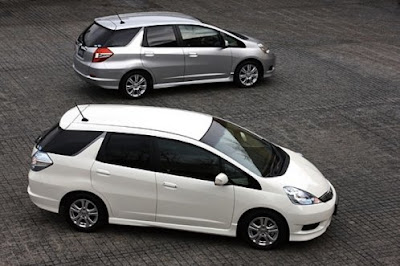
The scene unfolded as Honda Motor Co. launched the Fit Shuttle station wagon, including hybrid versions, for the domestic market Thursday — three months later than planned — another sign of the disaster's widespread impact.

The quake and tsunami destroyed Honda's parts suppliers, dealers and design facility in the Tohoku region.

Still, President Takanobu Ito was relieved the company had come this far.

"It was a real tough three months for us," he told reporters, wearing a casual beige jacket and no tie instead of his usual dark suits.

Cool Biz, the annual practice of allowing less formal attire to be worn in the office during the summer, is finally being embraced in a big way in the name of saving power. Now dubbed Super Cool Biz, some employees are even being encouraged to wear Aloha shirts and shorts.

Although no Honda executives were seen in shorts and their shirts were relatively staid, the nuclear crisis hung like a cloud over the event.

Tokyo-based Honda's invitation to the product launch — one of the first since March 11 — had warned that thermostats will be set at 28 degrees and that executives would be dressed in Cool Biz attire.

In addition to the Fukushima No. 1 crisis, which is expected to take years to resolve, another power plant was shut down months later over safety fears, causing the government to pressure companies and consumers to cut back on power use.

Automakers, a pillar of the economy, are under great pressure to cut power use 15 percent.
Autoworkers are producing cars on weekends and will instead take Thursdays and Fridays off for the next three months starting in July to reduce the load on power companies and avoid blackouts during peak demand periods.

Honda has said vehicle production in Japan will return to predisaster levels by the end of this month, and global production in August or September.

All orders for the Fit Shuttle will be delivered in two months' time, said Sho Minekawa, the executive in charge of Japan sales. There are no plans to offer the model overseas so far.

"We are finally able to introduce this product," he said. "We apologize to all those who have been waiting."

The Fit Shuttle, which comes as a hybrid (starting at ¥1.81 million) and with a gasoline engine (starting at ¥1.61 million), delivers the same mileage as the smaller Fit hatchback, according to Honda.

The hybrid version delivers 30 km per liter, or about 70 mpg, under Japanese test conditions, it said.

Honda is expecting its profit for the fiscal year through next March to plunge 63.5 percent to ¥195 billion from the previous year because of parts shortages and other disaster woes.

The maker of the Civic sedan and Odyssey minivan was battered by the cost of fixing damaged property and equipment, higher raw material costs, the strong yen and research expenses related to future products, such as environmental technology. Honda's global vehicle sales for the current fiscal year are projected to drop 6 percent on year to 3.3 million vehicles.

Honda to hire 1,000 temps
Kyodo
Honda Motor Co. will hire about 1,000 term employees at domestic plants, including in Saitama and Mie prefectures, during the second half of fiscal 2011 to cope with increased production expected from October to March, company sources said Thursday.

Honda is taking the measure because production is recovering from the March 11 catastrophe more quickly than anticipated and is expected to return to near normal by late June, they said.

The automaker will therefore withdraw its earlier plan set in April to gradually reduce the approximately 600 term employees at the plant in Saitama to zero by the end of September.

Honda will renew contracts of term employees if they want to do so, even for those whose employment contracts have already expired, they said.

Source;
http://search.japantimes.co.jp/cgi-bin/nb20110617a1.html


, , , , , , ,

Honda Cars : UPDATE: Honda Pres: Yen Remains Big Concern As Seeks To Restore Ops | 2013 New Honda Car Reviews 0

Unknown | 9:25 AM
Japan Disaster
Japan Disaster


By Yoshio Takahashi
Of DOW JONES NEWSWIRES

TOKYO (Dow Jones)--Honda Motor Co.'s (7267.TO) chief executive voiced concern about the yen's strength Thursday, noting its current position could offset the Japanese auto maker's attempt to recover after the March 11 earthquake and tsunami.

"My feeling is that (the business) situation is tough, especially foreign exchange. I hope that the (unfavorable yen level) will change," Takanobu Ito, president and chief executive of the car maker, said at a press conference for the launch of the auto maker's Fit Shuttle hybrid wagon.

Earlier this week Honda said that it expects its net profit for the current fiscal year through March to drop 63% on the back of the yen's strength and reduced output resulting from a parts shortage in the wake of the disaster.

Honda expects a scarcity of some key parts from suppliers stricken by the disaster to reduce its global sales by 6% to 3.3 million vehicles this fiscal year.

In a bid to push sales during harsh times, Honda rolled out the Fit Shuttle hybrid wagon in Japan three month behind the initial schedule due to the earthquake.

The new hybrid with a starting price of Y1.81 million was developed based on its Fit company hybrid and can run 30 kilometers on a liter of gasoline.

This price is lower than the lowest price of the Prius Alpha minivan hybrid launched last month by Toyota of Y2.35 million.

Toyota's new hybrid was also introduced in Japan with a delay due to the disaster.

Honda said it has received orders for 7,000 Fit Shuttle hybrids, well above the model's monthly sales target of 4,000 units.

But Toyota sees much stronger demand for its newest hybrid, saying Tuesday that it has received 52,000 orders in Japan for the new minivan version of the Prius hybrid one month after its launch. The number far outstrips the company's 3,000 monthly sales target for the Prius Alpha.

Source;
http://online.wsj.com/article/BT-CO-20110616-702125.html


, , , , , , ,

Honda Cars : Post-quake Honda says it now has lots of Fits, Insights for dealers | 2013 New Honda Car Reviews 0

Unknown | 7:32 AM
Japan Disaster
Japan Disaster

Honda offered a terrific sign this week that it is finally getting back on its feet in the U.S. after the March earthquake and tsunami that drastically slashed production.

It is now telling dealers that they can resume ordering two of the most in-demand models -- the small Honda Fit and the hybrid Insight, Automotive News reports.

The two models, both made in Japan, have been among the most in-demand as gas rose to an average of nearly $4 a gallon. The Fit is the smallest car that Honda sells in the U.S. and comes recommended by Consumer Reports. The Insight is the brand's underrated hybrid, a competitor to Toyota's Prius.

"Honda's manufacturing operations in Japan are returning to nearly normalized levels by the end of summer," said John Mendel, executive vice president of Honda's U.S. sales operation in a memo to Honda dealers. Adding back Fit and Insight "represents a major improvement from the recovery timetable we provided you last month."

Honda stopped orders on the models after the earthquake. Honda didn't incur major damange to its factories in Japan, but it has been badly impacted by the shortage of parts that has hampered other automakers, including those in the U.S.

In fact, Mendel is downright bullish. Noting that other models like the Pilot SUV, Odyssey minivan and CR-V small crossover are coming back to normal production levels, he implored dealers, "it is imperative that you keep your foot on the sales pedal."

It won't be easy: Sales fell 22% in May compared with a year ago, the News notes.

Source;
http://content.usatoday.com/communities/driveon/post/2011/06/post-quake-honda-says-now-lots-of-fits-insights-for-dealers/1


, , , , , , , , , ,

Honda Cars : Honda plans to bring its Japanese assembly plants back to normal output by summer | 2013 New Honda Car Reviews 0

Unknown | 7:30 AM
Japan Disaster
Japan Disaster

Honda Motor Co. is seeking to recover from the Japan disaster months earlier than forecasted. It expects that its assembly plants in Japan will be able to resume normal production by summer. Spokesman Keitaro Yamamoto said Honda’s factories in Sayama and Suzuka factories, the car’s only assembly plants in Japan, are expected to get back to pre-earthquake production levels by August. Honda had previously announced that global production will be restored by the end of the year. Honda had been significantly affected by the March 11 earthquake and tsunami in Japan that had resulted to disruptions in the supply chain and to idled plants.

But it’s likely that the global operations will normalize earlier with the progress in the country’s recovery, according to Autonews. Honda anticipates that the r&d center’s engineers, who were out of work after the disaster struck, will go back to the facility by the middle of June. The earthquake claimed one death and led to several injuries when it caused the ceiling at Honda’s body design facility to crash down. Last March, Honda put a thousand of its r&d workers (about 10% of the center’s total workforce) to continue their work at its other buildings in the site or at its other facilities in Japan while repairs are ongoing.

Yamamoto said that suppliers are exceeding expectations and are restoring output earlier. That is why automakers are also able to resume normal production earlier too. Honda’s improved outlook was revealed only days after it said that U.S. production will go back to normal this August for its entire lineup except the recently redesigned Civic. Honda has announced that a second shift will be put up later in 2011 at its Civic plant in Indiana to help make up for the production losses.

Source;
http://www.4wheelsnews.com/honda-plans-to-bring-its-japanese-assembly-plants-back-to-normal-output-by/


, , , , , , ,

Honda Cars : Policies say a lot about Honda | 2013 New Honda Car Reviews 0

Unknown | 6:52 AM
Japan Disaster
Japan Disaster

It is very good news that Honda expects all its North American operations to be back to full speed by August and that includes its Lincoln plant where three of its most popular vehicles are assembled.

The March earthquake and tsunami in Japan severely hampered Honda’s supply chain and ended up costing the giant automaker months of production as it faced difficult and at times insurmountable obstacles to getting supplies from Japan to North America.

Without those supplies, cars could not be built.

As time passed, the supply chain opened up a bit, and then a little more. But not too long ago Honda officials (along with other Japanese automakers) were expecting a late fall date for full production to resume.

Last week, however, the company announced it wouldn’t take that long.“Honda will increase production volume at its North America automobile plants to a rate of 100 percent original production plan in August,” a company press release announced.

Honda’s employees in Lincoln met the news with enthusiasm.

“Today we announced to our associates in plant-wide meetings that we are planning to accelerate recovery of our production. …” said Mark Morrison, a company spokesman. “When we announced that the Odyssey and Pilot would reach 100 percent of their original production plan in August, our associates greeted the news with great applause,” he said.

That kind of reaction is what you would expect from Honda employees. The 4,000 people who work in the local plant are intensely loyal and, based on the plant’s expansion since opening, also are very productive.

That loyalty and productivity have been rewarded with a unique approach to the forced slowdown in production. Rather than lay off workers, Honda allowed them to work on maintenance chores, or to take earned vacation time to keep their paychecks coming. And after the April 27 tornadoes ripped through our area, Honda allowed its employees to take two days per week to volunteer at cleanup activities while getting paid as though they were at work.

Those policies say a lot about Honda and the kind of company it is. And they say a lot about Honda’s employees and the kind of people they are.

Honda made it through this parts crisis without laying off a single employee in their North American plants, the company said. Now that they are ready to ramp up production again, those employees are available and their morale should be high, since no one had to do with a reduced paycheck during the difficult times.

The Japanese automaker obviously enjoys great economic strength to be able to weather such a crisis without cutting employee paychecks. We commend Honda for its approach, we continue to wish the company a long and prosperous future in Lincoln and the rest of its North America plants.

Source: The Daily Home - Policies say a lot about Honda


, , , , , , , ,

Honda Cars : WSJ: Honda To Resume Full North American Auto Production In August | 2013 New Honda Car Reviews 0

Unknown | 6:47 AM
Japan Disaster
Japan Disaster

By Mike Ramsey
Of THE WALL STREET JOURNAL

DAYTON, Ohio (Dow Jones)--Honda Motor Co. (HMC, 7267.TO) will return its North American auto production to normal levels for all but one vehicle in August, faster than the company expected, the company said in a statement Thursday.

Honda has been running its plants at around 50% of their normal volume since April because of limited supplies of critical parts. Honda, Toyota Motor Corp. (TM, 7203.TO) and Nissan Motor Co. (NSANY, 7201.TO) have all limited their production this year because of the massive March 11 earthquake that damaged dozens of parts suppliers, particularly electronics makers.

Unfortunately for Honda, the lone car built in North America that won't return to full production in August is the redesigned Civic. Production of the vehicle will remain at 50% of projected volume because of limited supplies of parts and return to normal sometime in the fall, the company said. The Civic is one of Honda's best-selling models and the redesigned model was expected to help drive sales this year, reversing a market-share decline.

"The light at the end of the tunnel is glowing brighter for us, represented by this significant improvement in our production situation," said John Mendel, executive vice president of American Honda Motor Co., in the statement.

Honda, with more production in North America than Toyota or Nissan, has been the slowest to return its plants to higher volume. Nissan's U.S. production missed only a few days and Toyota is ramping back up most of its plants in North America next month.

Low inventories of key vehicles, combined with few incentives from Honda and maybe the perception that cars aren't available, are expected to drag down Honda's sales results in May. TrueCar.com, a consumer research and vehicle pricing website, predicts Honda's May sales will decline 26%, the most of any major manufacturer.

Honda's Mendel last week sent a letter to dealers to encourage then to push for sales harder and to say that supplies wouldn't run out because sales results were disappointing at that point in the month.

Source;
http://online.wsj.com/article/BT-CO-20110526-707691.html


, , , , , , , ,

Honda Cars : Honda Gives Assurances to U.S. Dealers | 2013 New Honda Car Reviews 0

Unknown | 7:06 AM
Japan Disaster
Japan Disaster

By MIKE RAMSEY
DETROIT—Honda Motor Co. told its U.S. dealers Friday that July vehicle deliveries would increase by 11% from June levels and accelerate in August as the auto maker ramps up production after the March 11 earthquake in Japan.

American Honda Executive Vice President John Mendel said in a memo that its sales continued to "run at a relatively soft pace" despite what the company considers decent inventory levels, albeit lower than year-earlier levels.

"Many of you have indicated that it is due in large part to concerns for inventory going forward," Mr. Mendel said.

Honda follows Nissan Motor Co. in efforts to encourage its dealers to continue driving deals to gain customers despite a murky outlook for vehicle inventories this summer. Both auto makers and Toyota Motor Corp. had to stop production in Japan for several weeks following the earthquake, and all continue to face shortages of electronic components, LCD screens and rubber.

U.S. sales for Honda rose 10% last month compared to 18% for the overall industry.

"It's interesting to note that although our total inventory is down versus May 2010, we have more CR-Vs, Pilots and Fits in dealer inventory now than we did a year ago," Mr. Mendel said.

"With this level of inventory, coupled with competitive incentives focused on vehicles with sufficient availability, you all need to continue to push hard on the sales front."

Last week, Nissan asked dealers to be more aggressive and go after Toyota and Honda, which it deemed vulnerable.

Source;
http://online.wsj.com/article/SB10001424052748704816604576335061787279604.html?mod=googlenews_wsj


, , , , , , , ,

Honda Cars : Honda says parts supply recovery picking up speed | 2013 New Honda Car Reviews 0

Unknown | 6:39 AM
Japan Disaster
Japan Disaster

May 17 (Reuters) - Honda Motor is seeing a speeding up in the recovery of parts supplies, which will be key to bringing forward its timing for a return to normal production after a March earthquake and tsunami in northeastern Japan disrupted supply chains, the automaker's chief financial officer said on Tuesday.

Honda Chief Financial Officer Fumihiko Ike also told a small group of reporters that the company plans to announce its earnings forecast for the current fiscal year before its shareholders' meeting, which is scheduled for June 23. (Reporting by Kentaro Sugiyama; Writing by Junko Fujita; Editing by Edmund Klamann)

Source;
http://www.reuters.com/article/2011/05/17/honda-production-idUST9E7GA01I20110517


, , , , , , , , , ,

Honda Cars : Japan nuclear plant shutdown adds new risk to economy | 2013 New Honda Car Reviews 0

Unknown | 6:59 AM
Japan Disaster
Japan Disaster

By Stanley White and Chang-Ran Kim
TOKYO Mon May 9, 2011 1:27pm BST

(Reuters) - The surprise closure of another Japanese nuclear plant, this time at the power supplier to the heart of the auto industry, threatens to dampen consumer sentiment and will provide car makers with yet another reason to produce fewer cars in Japan.

Chubu Electric Power (9502.T) agreed on Monday to close its Hamaoka plant in central Japan, raising concerns over the steady supply of power to its region, which is home to Toyota Motor Corp (7203.T) and other major manufacturers.

The shutdown was requested by the government, which singled out Hamaoka as particularly vulnerable to a major earthquake and tsunami, after the 9.0-magnitude quake on March 11 triggered a nuclear crisis in the northeast.

Output disruptions may not be large enough to delay the economic recovery nationwide because Chubu is taking steps to meet peak summer demand by boosting thermal energy and securing electricity from another utility in western Japan.

But in the longer run the lack of clarity about how the government's energy policy might change following the March 11 disaster could tempt Japanese manufacturers to move more production overseas and discourage private consumption.

"We can rely on thermal power in the short term, but this raises costs and emissions," said Yasuo Yamamoto, senior economist at Mizuho Research Institute.

"In the future, we're not sure what the government wants to do. The longer that uncertainty about the power supply continues, the more companies will start thinking about manufacturing overseas."

The Hamaoka plant, located about 200 km (120 miles) southwest of Tokyo, accounts for about 15 percent of its electricity output. Chubu in turn provides power to half of the 18 plants that make Toyota's vehicles in Japan, and all four of Suzuki Motor Corp's (7269.T) domestic car and motorcycle factories.

The coverage area also includes other auto plants including those of Honda Motor Co (7267.T) and Mitsubishi Motors Corp (7211.T), but Toyota is most vulnerable given its heavy ratio of cars made domestically.

Toyota and Honda have been forced to operate at about half the levels planned before March 11 due to the shortage of components. They have forecast a return to normal production levels by the end of this year.

The Chubu region also includes a concentration of manufacturers in the flat panel display and semiconductor industries, such as Sharp Corp's (6753.T) Kameyama LCD factory and Toshiba Corp's (6502.T) Yokkaichi semiconductor plant.

Toyota, Suzuki and other car makers said they had no comment on how they would cope before Chubu Electric explains how it plans to make up for the power shortfall.

Replacing nuclear power with that produced by conventional thermal plants could increase electricity costs, but those make up only a small portion of automakers' costs, argues Nomura Securities auto analyst Masataka Kunugimoto.

What matters more, analysts say, is doubts about reliability of power supplies that could give automakers another reason -- in addition to a strong yen and cheaper labor abroad-- to shrink production volumes in Japan.

"This raises a question of how you're going to split your domestic and overseas production," said Koji Endo, senior analyst at Advanced Research Japan.

Toyota and Nissan have publicly committed to a minimum level of domestic production to keep Japan's tradition of manufacturing alive, but questions surrounding energy policy could force a rethink, Endo said.

The shutdown's impact on households could be more direct and immediate. Power cuts or a rise in electricity bills could force households served by Chubu Electric to save more energy or spend less on everything else, damaging sentiment already depressed by radiation leaks from the Fukushima plant in the tsunami-ravaged northeast.

Private consumption accounts for more than 50 percent of gross domestic product and Japan's limping economy badly needs consumer spending to hold up.

"Chubu Electric is likely to come up with a campaign to save power, which could depress private consumption," said Takuji Okubo, chief economist at Societe Generale Securities.

"Companies should be able to cope, but weak consumer sentiment could become a national phenomenon."

Source;
http://www.autospies.com/news/Closure-Of-Another-Power-Plant-May-Force-Auto-Production-Out-Of-Japan-63740/


, , , , , , ,

Japan Disaster Japan Disaster