HONDA CRV 2013 AutoCars Honda Civic | Honda Accord, Honda City, Honda Brio, Honda Amaze, Honda odyssey, Honda Assure, Honda Auto Terrace, Honda Customer Jazz, New Honda Cars in United States/America/USA, Canada, United Kingdom, France, Germany, Spain, Italy, India, Japan

Showing posts with label Car and Driver. Show all posts

Honda Cars : C&D Tips Drivers How to Go Over the Speed Limit and Avoid Tickets | 2013 New Honda Car Reviews 0

Unknown | 6:39 AM
Car and Driver
Car and Driver

 
If you drive a car, or have driven at some point in your life, you will undoubtedly be familiar with the concept of  speeding. Most drivers do it quite frequently, and it's not even intentional. These days the speed limit can change within a few miles, and if at the moment you were passing the restriction sign you happened to be looking at your mobile phone, or just away generally speaking, the cop around the corner is going to write you a ticket.
Now, though, since it is the future and we have so much technology and know-how at our disposal, Car&Driver says we can speed safely, and by that they mean free of tickets and accidents. They argue that if you don't overdo it (drive too quickly and erratically), and pay close attention to what's ahead, it can be done.
 
A journey on the highway is taken as an example, and the host, Csaba Csere, explains (with the aid of two vehicles) how drivers can maintain a steady speed, which is above the legal limit, without being caught or crashing. He suggests driving in a different lane, in order to slip under the noses of cops who are trained to look for specific patterns and can be fooled. That way you can maintain a slightly higher speed than you would normally, without drawing attention.
 
The video makes some other good points, and talks about app-integrated radar detectors, which are quite new and interesting… 
 
In the end, I wonder if this video hasn't done more harm than good, because we're sure at least some police officer watch these videos and will find out about these "secrets" and develop new ways of countering them…
By Andrei Nedelea

Source;
http://www.carscoops.com/2013/04/c-tips-drivers-how-to-go-over-speed.html


, , , , ,

Honda Cars : 2014 Honda FIT/Jazz to be unveiled at 2013 Tokyo Motor Show | 2013 New Honda Car Reviews 0

Unknown | 7:26 AM
Car and Driver
Car and Driver

If this gives us anything, it shows what's in store for the Jazz/Fit abroad, and seeing as the car is built on a global design, this could very well be close to what the car is going to look like....
The all new generation of the Honda Jazz a.k.a. the Honda Fit has been in focus since some time now. Enough has been speculated about the upcoming generation of the car and the launch of the new Jazz is being eagerly waited for.

Now, it has emerged that the all new generation of the Honda Jazz/Fit will be unveiled before the end of this year and Mr. Dave Hodgetts, Managing Director, Honda UK had confirmed that the new car will make its public debut at the Tokyo Motor Show that is scheduled to be held in November this year.

Brazilian publication Car&Driver reports that the all new Jazz would have a 6cm longer wheelbase and hence, will have an even roomier cabin than the current model. However, the increased wheelbase won’t really affect the overall length and the new Jazz won’t be longer than 3.96m.

This means that the new Jazz will benefit from reduced excise duty in India and might be priced really well.

The new car will come with a taillight cluster that would be shaped like a diamond and the boot, at 414 litres, will offer 30 litres of more space. The new car will also get triangular reflectors incorporated into its bumpers. The car will borrow many design cues from the Urban SUV concept that was showcased at the North American International Auto Show 2013.

Powering the car might be an all new three cylinder petrol engine that might stretch a litre of unleaded to as many as 35.4 kilometers! The Brazilian market will also get 1.4L and 1.5L flex-fuel motors with 101hp and 106 hp of power.

For the Indian market, the Jazz could borrow the 1.5L EarthDreams diesel engine from the upcoming Honda Brio Amaze. This motor is being reported to have been developed alongside the much hyped Honda 1.6 litre EarthDreams diesel engine that powers the UK spec Civic.

The all new Honda Jazz could be in India by Diwali 2014.

Source –  caranddriverbrasil.uol.com.br

Source via;
http://caranddriverbrasil.uol.com.br/segredos/exclusivo-revelamos-o-novo-fit/4486


, , , , , , ,

Honda Cars : 2012 Car and Driver 10Best… and the winners are | 2013 New Honda Car Reviews 0

Unknown | 8:28 PM
Car and Driver
Car and Driver

“Over one week in September, and over a distance of more than 15,000 miles, our editors drove every new 2013 model under $80,000, as well as our returning winners, to bring you this year’s 10Best,” CARandDRIVER said – here’s the full list of winners.
2012 Car and Driver 10Best winners:
- By: Omar Rana
Source: CARandDRIVER

Source;
 http://www.egmcartech.com/2012/12/05/2012-car-and-driver-10best-and-the-winners-are/


, , , , , , , , ,

Honda Cars : Car and Driver takes the 2013 Honda Accord for a First Drive | 2013 New Honda Car Reviews 0

Unknown | 6:38 PM
Car and Driver
Car and Driver

There were low points in the past few years when we doubted Honda, but Big H might be on its way back. The new, ninth-generation Accord is a convincing reminder of the company’s core values and—considering all Honda has been through, including an earthquake that smashed its Tochigi R&D center and floods in Thailand that crimped production—a triumphant return to form.

This latest Accord is 3.5 inches shorter bumper to bumper and 0.9 inch tighter at the wheelbase than its fleshy predecessor. Yet once again, Honda conducts a master class in packaging. Against its porcine predecessor, the 2013 car’s cabin dimensions vary hardly at all. The Accord still feels like one of the biggest cars in the segment, with two roomy and extra-comfortable front buckets and a back bench you and two friends can stretch out on. Moreover, the capacious trunk is even larger, maximum volume having increased by over one cubic foot.

The overhauled DOHC 2.4-liter four falls under the somewhat nonsensical Earth Dreams marketing slogan; more important, however, is that it represents Honda’s first whack at gasoline direct injection for the North American market. Your only automatic alternative to the six-speed manual with this engine is a Honda-built continuously variable transmission (CVT) called the G-Design Shift (Honda’s committee for cutesy names has been working overtime).

The 2.4-liter is quieter at idle than some other direct-injection engines with their clattering high-pressure injectors, particularly Hyundai’s. And the Honda likes to rev, sounding healthy and full throated at its 6400-rpm power peak. But it’s the CVT’s tuning that makes the Accord feel fleet. The typical rubber-band delay has been minimized, and the throttle responds curtly when you ask for acceleration (although sometimes with some audible transmission whine at high revs). In mountain snakers as well as on city streets, the CVT works so efficiently that it all but disappears, and you never notice the lack of a manual control. Of course, we’d prefer the optional six-speed stick, with its tightly spaced gates and short throws—but, finally, a belt-and-pulley transmission we can live with!

Somewhere between 15 and 20 percent of Accord buyers opt for a V-6, and for them, the 3.5-liter goes up slightly in horsepower to 278. But the news with this engine is its lighter weight due to items such as plastic cam covers and work on the Variable Cylinder Management system that increases the time the engine runs on three cylinders. In motion, the cylinder cutout is completely transparent, and the V-6 does what it’s supposed to: provide more sophisticated and effortless propulsion.

Once again, only in the Accord coupe can you pair the V-6 with a six-speed manual—a six-speed conventional auto is the only box in six-cylinder sedans. Out of corners, the car is a “one-tire fire” as the open differential sets the less-taxed wheel spinning madly. But it’s a very hot setup in eight-tenths driving, especially given that it’s front-wheel drive.

That’s because the Accord drives as if it were constructed of old-fashioned Honda “lightweightium.” It’s not the lightest car in its segment, but it feels it. The steering, the brakes, and the suspension work in harmonious balance to make the Accord seem agile and springy. Yes, instead of control arms, it now has struts in the nose, but so does a Porsche Cayman. The Accord hustles through turns with fog-free steering and little complaint from the tires and never seems to be working very hard. You wanted a mid-size family sedan that feels as if it were made of recycled CRXs? Here’s your car.

Lessons from the distressed Civic have been learned, and the Accord feels nicely appointed, with softer materials and better sound insulation. The dash is done to Honda’s familiar template of large, maxi-print gauges and many, many small buttons. You can pile on navigation and the associated extra panel of controls, which will be familiar to current-gen owners, or save your money and make do with a deep drawer hidden behind a somewhat clumsy-looking plastic door.

Our favorite option is a clever blind-spot camera that Honda calls LaneWatch. Mounted at the bottom of the passenger mirror, the camera switches on whenever you activate the turn signal or push the manual control button at the end of the turn-signal stalk. Another techie option is LED headlamps, Honda’s first and available on the top trim level. A regular hybrid model returns to the lineup, but not until next summer, some months after its plug-in variant arrives at dealerships. We’ve already driven a prototype of the latter.

With a flat roof and highly conservative rake to its glass, the Accord remains unapologetically a mid-size family car. You can complain about the design’s lack of sizzle but not its practicality. The door openings are wide, the step-over sills are narrow, and the beltline is kept unfashionably low to create huge glass portals. If people don’t see you because your vehicle is plain, at least you will see them.
There are more Accord models than ever. To chase younger buyers, there’s a 2.4-liter Sport trim with larger, 18-inch rims; a dual-tip exhaust; a rear spoiler; fog lights; and paddle shifters on cars equipped with the CVT. At the top end is the new Touring, a V-6–only model that is sort of a Honda Avalon with leather, adaptive cruise control, forward-collision warning, a thumpy stereo, and so on.

Regardless of trim level, the new Accord proves that Honda wants to be Honda again.

Source;
http://www.caranddriver.com/reviews/2013-honda-accord-sedan-first-drive-review


, , , , , , , ,

Honda Cars : 2013 Acura ILX 2.4 Tested by Car and Driver | 2013 New Honda Car Reviews 0

Unknown | 8:01 AM
Car and Driver
Car and Driver


BY DAVID GLUCKMAN

Timing may not be everything, but it counts for a lot. If Honda hadn’t first dumbed down its compact mainstay, the Civic, we might have expected more from a little Acura based on it. And if Acura hadn’t built this car once before, we might not have expected another good little sedan.

To Acura’s credit, the ILX reminds us more of the brand’s arguably most successful downsizing venture, the first-generation TSX, than of the dowdified Civic. On paper, the similarities between the original 2004 TSX and this car are too hard to ignore. 

Same wheelbase. Same basic tires. Same interior volume, give or take a cubic foot. And a similar feel as long as you’re not pushing it. Or turning.

The ILX tested here even uses the six-speed manual and VTEC-equipped 2.4-liter four-cylinder from TSX v1.0, albeit with gearing variations and a slight bump in the compression ratio that yields a skosh more output. (The base ILX’s 150-hp four and the hybrid model—are decidedly less TSX-y.)

The 2.4 is still offered in the now-larger TSX, a car that has us asking: If a sedan bloats in the forest, how long until another small car takes its place? And will anyone remember its alphanumeric designation? But we digress. The 2.4-liter is also used in the latest Civic Si, where it replaces a rev-happier 2.0-liter—not necessarily what the Civic faithful wanted, but its smoother power delivery suits the Acura nicely. The ILX, sadly, does not inherit the Si’s limited-slip differential.

Whereas the original TSX begged you to play, though, the ILX asks politely, then keeps quiet when you show no interest.  Actually, it never quite keeps all that quiet. In sixth gear, the engine is buzzing like it’s in fourth. In fourth, it makes you want to hurry up and shift to sixth. The engine isn’t even halfway to its 7100-rpm redline at 80 mph, but the aural feedback suggests otherwise. It also suggests, inaccurately, that this engine has a turbo feeding it. Weirdness.

The ILX’s electric power steering gives a superb sense of straight-ahead, but there’s more oddity when you turn the wheel—everything goes light, then loads up unnaturally. A few sawing motions will send the slow steering, the front tires, and the rear end all out of phase, which only serves to highlight the comfort-oriented suspension’s disconnection from reality. And as with that original TSX, grip from a set of Michelin Pilot HX MXM4 tires falls off earlier than we’d like.

Dynamic malfeasance aside, we do have to thank Acura for thinking of real drivers when it came to configuring ILX variants. The 2.4-liter model is the only one that comes with a manual, and it comes only with a manual. The wonderful transmission borrowed from the Si is topped by that car’s beautifully precise little shifter, minus the red trim. There are no options here, either. You’ll get a nicely fitted cabin sans navigation and like it. Row your own gears and plan your own routes. Practically everything else in the cabin is powered and/or automatic, as it damn well should be in a car costing 30 large.

Ballooning mustn’t necessarily be followed by ballooning; this ILX weighs less than 3000 pounds while that first TSX was just shy of 3250. So, with the same basic engine, the ILX has an accelerative advantage—60 mph comes in 6.9 seconds instead of the 7.2 required of a 2004 TSX. Its braking distance from 70 mph is likewise better, by seven feet. No doubt some of the mass shed was in the form of sound deadening; the original TSX was much quieter in all of our sound-level measures.

The TSX was lauded when it came out, and for good reason: It was good. This almost-second coming follows its path, if not exactly its footsteps. 

Source (with more pix);
http://www.caranddriver.com/reviews/2013-acura-ilx-24-instrumented-test-review


, , , , , , , , ,

Honda Cars : Car and Driver Reviews the 2013 Honda Accord Coupe Concept | 2013 New Honda Car Reviews 0

Unknown | 7:18 AM
Car and Driver
Car and Driver


We like our Honda Accords around here, having awarded the car no fewer than 26 10Best awards, including in all five model years of the current generation. And so it was with keen interest that we watched Honda preview the ninth generation of the Accord at the 2012 Detroit auto show in the form of this coupe concept. Rendered in a gorgeous deep satin red with lots of glitzy chrome, the Accord coupe concept was not driven on stage but rather hurled like a curling stone toward the audience on a rotating platform, providing a 360-degree look at the car that will go on sale by the end of the calendar year.

Based on this show car, the 2013 Accord will be instantly familiar to anyone who’s seen the car we have today. But the sharp creases of the current model look to be augmented with a few more curves, most notably in the line that rises over the rear wheel and the kick-up from the rocker panel. Also, apparently the front and rear ends will look exactly the same. The next Accord coupe will be roughly the same size as now, but Honda says that the sedan will be shorter in length and lighter. The latter will face some of its stiffest—and best-looking—competition yet in the form of the 2013 Ford Fusion, the 2013 Chevrolet Malibu, and the 2012 VW Passat, to name a few, so to stand relatively still in the styling department places even more importance on what is found under the Accord’s skin.

Two All-New Gasoline Engines
What we’ll find between the doors remains purely hypothetical at this point, as we weren’t allowed a peek inside the concept. But somewhat surprisingly—or perhaps not, for a company eager to prove it can still produce world-class powertrains—Honda revealed some information on what to expect under the hood. Big H says that the 2013 Accord will offer two all-new gas engines, including the first U.S. application of its direct-injected 2.4-liter four-cylinder engine with 181 hp and 177 lb-ft of torque. (The current base four-pot makes 177 hp and 161 lb-ft of torque.) It will come paired with either a six-speed manual or a CVT that Honda promises will be “fun,” which, if true, would be a minor miracle.

While key competitors are abandoning larger engines in favor of fully four-cylinder lineups, the next Accord will again offer a naturally aspirated V-6. We’ll note here that only four-cylinder Accord models were awarded a 10Best prize this year, so our narcissistic side says that Honda is trying to get back into our good graces with a re-engineered version of its 3.5-liter V-6—and by offering it with a choice of six-speed automatic and manual (hooray!) transmissions. Honda added that V-6 models equipped with the six-speed automatic will feature cylinder deactivation. As for efficiency, the automaker says that all four-cylinder and V-6/automatic models will deliver best-in-class fuel economy.

Return of the Accord Hybrid—This Time as a Plug-In
The next-gen Accord also will offer a plug-in hybrid option starting next winter, with a 2.0-liter Atkinson cycle four-cylinder paired to a 120-kW electric motor and a 6-kWh lithium-ion battery. There will be three distinct driving modes: fully electric, hybrid, and “direct drive,” which will allow the driver to remove electricity from the propulsion equation. The Accord is said to be able to drive 10 to 15 miles on electricity alone so long as speeds don’t climb beyond 62 mph and, we presume, you don’t do much more than breathe on the accelerator. In addition to the usual on-the-fly power regeneration, charging of the battery should take less than 1.5 hours on a 240-volt charger, according to Honda.

All models, regardless of cylinder count or battery assist, will feature “Eco Assist” driving modes with an “Eco” button providing more efficient operation as well as visual indicators to encourage a kinder, gentler driving style. The next Accord also will offer safety features such as lane-departure and collision warning systems. Finally, Honda promises a new full-color “intelligent” multi-information display by which owners will be able to control their smartphones and apps such as Pandora.

We’re looking forward to seeing the final product, but it won’t be until we slide behind the wheel that we’ll have an idea whether the next Accord is good enough to capture a 27th 10Best trophy.

Source;
http://www.caranddriver.com/news/2013-honda-accord-coupe-concept-photos-and-info-news


, , , , , , , ,

Honda Cars : Car and Driver: Ford Evos Concept - Auto Shows | 2013 New Honda Car Reviews 0

Unknown | 7:31 AM
Car and Driver
Car and Driver

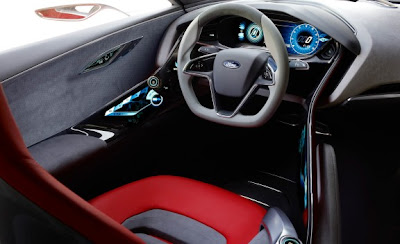
Wow....

Good genes: Ford’s Frankfurt debutant defines a new design language for its global products.

BY STEVE SILER


At the 2005 Frankfurt auto show, Ford’s stunning Iosis concept car debuted the company’s “Kinetic” design language, which shortly thereafter debuted on non-U.S. models like the Mondeo, European Focus, C-Max, and Kuga. Our first taste of Kinetic design came more recently with the 2011 Fiesta and 2012 Focus models. But now Ford’s look is evolving, with another Frankfurt concept—the 2011 show’s gorgeous and aptly named Evos—previewing the next evolution (get it?) of Blue Oval design.


Sadly, the company won’t go so far as to adapt the Evos’s quad butterfly doors for production. But this fastback four-seater, which is shorter than a Focus sedan but wider than a Porsche Panamera, does embody a half dozen newly defined pillars of Ford global design—which will drop the Kinetic moniker. The Evos will provide the template for future Fords, and so we took a virtual tour of the car with Ford design chief J Mays, who explained those design pillars.


Ford’s New Global Design Language, Explained

The first two pillars of Ford’s new design language are “silhouette innovation” and “perceived efficiency.” The former, according to Mays, represents a profile “that defines your automobile and looks different than most of the other cars in a particular class on the road,” while the latter equates to visual lightness and sleekness. “We’d like to have lightweight pillars [and] a teardrop cabin [where] the lines on the side disappear at a vanishing point somewhere around 100 yards behind the car.” The gist? Think less ‘traditional three-box sedan’ and more ‘four-door coupe.’


“Refined surface language” refers to a smoothing out of Kinetically sculpted body surfaces, among them the architectural fenders, creased door skins, and sculpted hoods. This directive also appears to be a reaction to other manufacturers that Mays claims have “annexed” and subsequently exaggerated Ford’s Kinetic motifs. Ford is going in “exactly the opposite direction” now, he said, keeping what he called the “excitement” of Kinetic design but rendered in “beautiful shapes you’d love to run your hands over.”


An emphasis on the fourth pillar, “technical graphics,” basically refers to the lamps and lower body addenda. “Headlamps seem to be growing to absurd proportions,” said Mays. “They’ve become less about technology and more about design flourish and style. And we think that’s reached its complete evolution. So we’re going to the minimal height for the headlamps and the taillamps and we’re going to let the technology speak for the graphics rather than overt style.” The headlamps on the Evos are rendered in LEDs “designed in such a way that you probably haven’t seen before.” Will every future Ford model get “razor-cut” headlamps such as these? Yes, and Mays told us that he is committed to LED headlamps on every new Ford, although we’ll have to see if those make it past the accountants.


The final two newly defined design-isms are the “new face of Ford,” which involves pulling the trapezoid grille way up to the leading edge of the hood (it gives the Evos a sort of Mustang-esque shark nose), and a “visual sense of premium quality,” which—besides being less catchy than the others—basically means creating the sort of designs people associate with higher-end cars. “We’ve tried to eliminate one of the grilles on the vehicle, and focus on the other. And what that does is allow us to have a smaller inlet, gives us better aerodynamics, and also, I think, looks much more premium.”


If roadgoing Fords end up looking like the Evos, we say “mission accomplished” to the premium bit. Indeed, more than a few of us think that the “new face of Ford” looks a lot like the current face of Aston Martin, particularly, the slim, six-sided grille and Rapide-esque roofline. Could Ford be suffering from a case of “seller’s remorse” after getting rid of Aston Martin during the great fire sale of 2008? Mays didn’t admit any such—to borrow his own term—annexation of Aston’s designs, but when asked about the similarities, he seemed rather comfortable with the comparison.


Head in the “Cloud”

However Aston-y the Evos looks, it wouldn’t be a show car if it didn’t contain a boatload of future tech. Cloud-based connectivity supposedly helps the Evos identify and pre-arrange its various systems to match the preferences of the upcoming drive, thus promising “seamless connectivity” from home to car to office, which may or may not be a good thing. It also gauges the skills of the driver and, reconciling them with weather and road conditions, adjusts the powertrain and chassis to maintain “optimum safety”—which sounds a bit Hal 9000 to us. Then there are the “driver wellness” features, too, which include a heart-rate monitor; the car is able to use current and previous data via the cloud to monitor “the physical state and workload of the driver and adjusts the driving experience accordingly.” To the good, if you start driving aggressively, the Evos will also simplify the gauge cluster to provide only necessary info and switch the driver’s phone to “do not disturb mode.”


The Evos is powered by—what else?—the cloud. Just kidding. It features a lithium-ion-based, plug-in gas/electric powertrain that’s said to be able to deliver extended-range or parallel-hybrid propulsion, ultimately delivering the same sort of fuel economy as the Ford C-Max Energi that’s scheduled to arrive stateside next year. Ford gave no more details on the powertrain beyond this: The cloud would theoretically be heavily involved, directing the car when to make various on-the-fly powertrain adjustments, such as switching to electric mode when driving into a city center that may have emissions restrictions.


We won’t have to wait long to see the look previewed here on a saleable Ford product. The 2013 Fusion will be the first Ford to wear the new design language; we expect to see that car next January at the Detroit show. In the meantime, if you can make it to Frankfurt, check out the Evos—it’s a stunner.


Source;

http://www.caranddriver.com/news/car/11q3/ford_evos_concept-auto_shows

, , , , , , , , ,

Honda Cars : Car and Driver: 2012 Honda CRV | 2013 New Honda Car Reviews 0

Unknown | 8:11 AM
Car and Driver
Car and Driver

2012 Honda CR-V Spy Photos - Future Cars

Honda continues its trend of gentle evolution with the next-gen CR-V.

BY JUSTIN BERKOWITZ, PHOTOGRAPHY BY ROBERT WHITLEY AND THE MANUFACTURER
May 2011

A fearless Car and Driver reader in Washington, D.C., snapped this picture of the next-generation Honda CR-V crossover, which will debut this fall. The vehicle looks ready for production, wearing its own sheetmetal (rather than the modified body of an existing Honda model) with the badge buried in tape on the tailgate.

Like other Japanese auto companies, Honda is as tight-lipped as can be about its future products. We’re left to use recent history and this photo to determine that the next CR-V will represent a gentle update to the current car, rather than a radical redo.

Figure on a naturally aspirated four-cylinder being the only engine available. It should displace 2.4 liters like today’s CR-V engine, and we expect it to make between 180 and 200 hp—although the number may be closer to the bottom end of that range. Fuel economy also should improve slightly; in front-drive spec, the current model is rated for 21 mpg city and 28 mpg highway. (All-wheel-drivers are rated for 21/27.)

If there are any major changes to the upcoming CR-V, it could be in the seating layout. Until now, every CR-V has been a strictly five-seat affair. Given the long rear overhang of the car in this photo, however, it looks like there just might be room for a small third row of seats for short-legged passengers. Toyota sells a three-row RAV4, but most others in the segment serve a maximum of five.

Few would call the CR-V in its present form a pulse-raising vehicle, but it’s a staple for Honda, offers good driving dynamics, and is a sensible choice for more than 200,000 Americans per year. Even without concrete details on the next-generation CR-V, we feel confident saying it will maintain the current car’s sales success. We expect the 2012 CR-V to debut at the Los Angeles auto show this November.

Source;
http://www.caranddriver.com/news/spied/11q2/2012_honda_cr-v_spy_photos-future_cars


, , , , , ,

Honda Cars : Car and Driver: 2011 Chrysler Town & Country vs. Honda Odyssey, Nissan Quest, Toyota Sienna - Comparison Tests | 2013 New Honda Car Reviews 0

Unknown | 7:32 AM
Car and Driver
Car and Driver

Really comprehensive article with a ton of pics (follow the links) that take you right there....
Family Planning: Minivans throw fashion to the wind. But nothing can match their kid-hauling utility.
BY MICHAEL AUSTIN, PHOTOGRAPHY BY MARC URBANO April 2011

Guess what? Minivans are still uncool. Automakers know this. Even the latest ads for the Honda Odyssey and the Toyota Sienna acknowledge the squareness of the segment. Sales have stabilized at about 500,000 units per year since tragically hip moms and dads fled to crossovers.

As a mature segment with little potential for growth, minivans are getting comfortable with their squareness. For evidence, we direct your attention to the new Nissan Quest, which not only acknowledges its one-box silhouette but drapes a metaphorical trench coat over the whole thing.
So minivans are cool with being uncool. Can we move on? The premise remains the same as before: Maximize people and cargo space, and forget about the styling. Driving dynamics get second billing. The point is to get you and your kids (or, for aging boomers, your dogs) to and from every destination with the least amount of hassle and the most comfort.

The newest in our assembled quartet is the Nissan Quest, back after a two-year hiatus. Now based on the company’s D platform (shared with the Altima, Maxima, and Murano), the Quest is similar to the Japanese-market Elgrand. For 2011, the Chrysler Town & Country (and its sibling, the Dodge Grand Caravan) gets freshened exterior and interior styling, a retuned suspension, and—most important—a new 283-hp V-6 mated to a six-speed automatic, which replaces all three previous powertrain offerings.

The Odyssey and the Sienna are also new for the 2011 model year, but both offer carry-over engines lashed to new six-speed automatics (available only in Touring trim on the Honda).

There’s a lot of common ground among this set. All four are powered by 24-valve V-6 engines, with only 35 horsepower separating the strongest (Chrysler) from the weakest (Honda). In the top-of-the-line trims we specified for our test group, each minivan comes with power side doors and a power rear hatch. They all offer some sort of flat load floor when the seats are folded and/or removed.

It’s worth noting that although the vans tested here all ring in at about $40,000, each can be had for closer to $30,000. The price of the Sienna, the highest in this test, drops as low as $25,370 for a base four-cylinder model.

In light of the targeted use of these vehicles, we focused on the passenger compartments as much as we did on behind-the-wheel impressions. We watched Team America: World Police multiple times in an effort to evaluate the rear-seat entertainment systems. We also wore a pregnancy-simulation vest while examining each minivan for ease of child-seat installation. And yes, we left some small part of our dignity behind these sliding doors.

4th Place: 2011 Toyota Sienna Limited
Highs: Barcalounger second-row seat, two glove boxes, parking-lot friendly.
Lows: Cheesy-looking fake wood, light on refinement, bland as a Camry.
The Verdict: Looks great on paper but fails to inspire in person.
Full review of the Toyota;
http://www.caranddriver.com/reviews/comparisons/11q1/2011_chrysler_town_country_vs._honda_odyssey_nissan_quest_toyota_sienna-comparison_tests/2011_toyota_sienna_limited_page_2

3rd Place: 2011 Nissan Quest LE
Highs: Funky styling, tight turning radius, comfortable front seats.
Lows: Low-rent center-console plastics, only one 12-volt power port in front.
The Verdict: Not the Holy Grail of minivans but headed in the right direction.

For the full review on the Nissan;
http://www.caranddriver.com/reviews/comparisons/11q1/2011_chrysler_town_country_vs._honda_odyssey_nissan_quest_toyota_sienna-comparison_tests/2011_nissan_quest_le_page_3

2nd Place: 2011 Chrysler Town & Country Limited
Highs: Sporty steering, balanced chassis, high level of refinement.
Lows: Underwhelming engine power, dowdy exterior styling.
The Verdict: Chrysler fixed everything that was wrong and kept everything that was right.

For the full review on the Dodge;
http://www.caranddriver.com/reviews/comparisons/11q1/2011_chrysler_town_country_vs._honda_odyssey_nissan_quest_toyota_sienna-comparison_tests/2011_chrysler_town_26_country_limited_page_4

1st Place: 2011 Honda Odyssey Touring Elite
Highs: Excellent ergonomics, seating for eight, trick folding third row.
Lows: Slow and numb steering, contrived exterior styling.
The Verdict: Good for drivers, great for passengers.

For the full review on the Honda;
http://www.caranddriver.com/reviews/comparisons/11q1/2011_chrysler_town_country_vs._honda_odyssey_nissan_quest_toyota_sienna-comparison_tests/2011_honda_odyssey_touring_elite_page_5


, , , ,

Honda Cars : Car and Driver: Honda Civic Si Coupe and Civic Sedan Concepts - Auto Shows | 2013 New Honda Car Reviews 0

Unknown | 12:26 PM
Car and Driver
Car and Driver

And now for car and driver's take....
This pair of Detroit concepts point directly to the next-gen 2012 Civic, which will come in regular, Si, hybrid, and natural-gas versions.
BY TONY SWAN, PHOTOGRAPHY BY PATRICK M. HOEY AND THE MANUFACTURER January 2011
The Honda Civic, a perennial compact bestseller, is being readied for a major makeover, and this is essentially what the coupe and sedan will look like when they go on sale this spring as 2012 models. We say essentially, because the cars unveiled at the 2011 North American International Auto Show in Detroit—coupe and sedan body styles—were presented as concepts.

This is typical Honda preview tease, but aside from the 19-inch wheels and some minor exterior trim, the concepts are very faithful representatives of the production cars’ styling. Clearly, Honda was going for an evolutionary take on the current Civic’s shape. Also typical of Honda preview, very little substance accompanied the showbiz reveal ceremony. No specifications, no price info.

Insider Tips and Guesstimating
However, we do have some insider hints regarding these preview princesses, as well as some educated guesses. Honda verified that these cars will actually be slightly smaller than the old models, and lighter, too; our guesswork has us figuring on updates in chassis rigidity, improved aerodynamics, improved crashworthiness, more refinement, and continued high marks for fun-to-drive.

What we do know about powertrains and model availability: The sedan and coupe will both be available in workaday variants, and the Si coupe concept shown here clearly heralds the return of that hopped-up model. Honda also said that the 2012 Civic sedan will come in three additional flavors: Si, hybrid, and natural-gas.

The hybrid will upgrade to lithium-ion batteries (from NiMH) and the latest version of Big H’s Integrated Motor Assist hybrid system, and the availability of the natural-gas Civic GX will be broadened to cover the entire country. (The current GX is available only in Oklahoma, Utah, New York, and California.) No detail was given on the base or Si models’ i-VTEC gas engines or transmissions, although Honda did say they’d be more fuel-efficient. We figure on evolutionary changes yielding small power increases, plus five- and six-speed manual transmissions and a new six-speed automatic in place of the old five-speeder.
It will be a while before Honda reveals any pricing info, but we estimate a base sticker of about $17,000 for the entry sedan and coupe, soaring to over $25K for top-spec trims. Hot-rod Si models will probably start at a little over $23,000.

This will be the ninth generation of Honda’s Civic line, which dates to 1973. Although it constantly battles Toyota’s Corolla in the compact sales charts, the Civic’s blend of thrifty operation, durability, innovation, value, and lively dynamics have made it a long-time Car and Driver favorite and a five-time 10Best winner. We’re looking forward to seeing if this latest one picks up the mantle.
Source;


, , , , , , , , ,

Honda Cars : Car and Driver: 2011 Acura TSX Sport Wagon - First Drive Review | 2013 New Honda Car Reviews 0

Unknown | 6:41 AM
Car and Driver
Car and Driver

A charming new chapter in the station wagon revival.
BY TONY SWAN December 2010

At first glance, a traditional mid-size station wagon is unexpected from a company that’s scoring its best sales numbers with a crossover, the MDX. Considering there hasn’t been a conventional wagon in the U.S. Honda and Acura lineup since the fifth-generation Accord, which ended its run at the conclusion of the 1997 model year, the TSX wagon seems even more surprising.

But Acura knows not all the young, affluent small-family types out there are smitten with crossovers. There are at least a half-dozen traditional station wagons in the entry premium category—base prices range from about $30,000 to $40,000—and there’s potential for great growth if, well, if people would just realize how much better wagons are than SUVs.

Sport with a Small S

Acura didn’t create this car from scratch. Like the TSX sedan, the new wagon is a luxed-up version of the European Honda Accord. But there’s an asterisk. Unlike the sedan, which has charmed C/D staffers through two generations now, the wagon comes up a little short on the sporty score sheet. Agile: check. Competent: check. Quick, communicative steering: check. Excellent brake-pedal feel: check. No surprises: check. Comfort, quiet operation, and lots of standard features: check, check, and check.

Acceleration: not so fast. When it goes on sale December 21, the TSX wagon will offer a single powertrain—the base 201-hp, 2.4-liter four mated with a five-speed automatic. No manual transmission option. No V-6 option. With its modest torque, the 2.4-liter four isn’t an engine that’s likely to provoke acceleration brownouts or smoky burnouts. Paired in the sedan with the six-speed manual gearbox, a very slick unit in the best Honda tradition, it provides acceptable go amplified by the pleasure of engaging the right gear for the rather narrow power band.

Bolted to the automatic, though, the four-cylinder produces forward progress that’s distinctly more deliberate. And adding mass to the equation—Acura lists the wagon’s curb weight at 3599 pounds, 129 more than the four-cylinder automatic sedan’s and 199 more than the manual sedan’s—doesn’t make the going any quicker. Two-lane passing requires careful planning, and it’s hard to see the wagon as a weapon of choice for the free-for-all commuter.

If the absence of a manual transmission is disappointing, Acura’s rationale is hard to dispute. For one, even though most of the wagon’s major competitors offer do-it-yourself shifting, the take rate for the manual TSX sedan has dwindled to less than 3 percent, according to Acura. Second, Acura’s business case for the wagon is tentative—4000 units for 2011—making it important to keep the build orders simple. Four of the car’s prime competitors offer traction at both ends, but Acura has no plans to offer all-wheel drive on the TSX sedan or wagon.

The Good News

Although blistering performance may not be part of the deal, there is nevertheless a lot about the car to like. The wagon is 3.6 inches longer than the sedan and delivers far more cargo capacity. There are 26 cubic feet behind the rear seats, with a flat load floor, several tie-down points, and more storage under the floor. With the seats folded flat, the cargo well expands to 61 cubic feet, as good as anything in this class and bigger than most.

And, like other Acuras, the TSX wagon is well equipped. The base price of $31,820—that’s near the low end of the competitive spectrum and $1350 more than a sedan—includes a satisfying array of standard luxo features. There’s only one option, the Technology package, which adds $3650 to the sticker and navigation and ultra-high-end audio to the equipment list. The wagon is a tad thirstier than the four-cylinder sedan—22 mpg city and 30 highway, according to the EPA, versus 22/31—but is still near the top of the competitive charts.

The final plus: This is arguably the best-looking member of the TSX lineup and is close to the Audi A4 for visual leadership in the class. Acura has toned down the TSX’s lamentably beaky chrome grille for 2011, and the canted rear hatch adds a zoomy look to the package in addition to enhancing rear cargo access. A manual-transmission choice would make the station wagon more entertaining in our view, but the other TSX virtues are intact—and simply being a station wagon is a virtue unto itself.

Source (with a ton of pic's);
http://www.caranddriver.com/reviews/car/10q4/2011_acura_tsx_sport_wagon-first_drive_review


, , , , , , , ,

Honda Cars : Honda Accord and Fit Receive Car and Driver Magazine's "10Best Cars" Awards | 2013 New Honda Car Reviews 0

Unknown | 8:22 AM
Car and Driver
Car and Driver

Car and Driver magazine has named the 2011 Honda Accord and the 2011 Honda Fit as two winners of its prestigious and highly competitive, annual "10Best Cars" award. Now in its eighth generation, the Accord has achieved "10Best" status 25 times in the 29 years that Car and Driver editors have been conducting the competition, more than any other vehicle in the award's history. The Honda Fit has been honored with 10Best status in each of the five years that it has been on sale in the United States.

"The Car and Driver '10Best' awards are among the most coveted awards in the industry," said John Mendel, executive vice president of American Honda Motor Co., Inc. "These awards recognize the company's ongoing emphasis on performance, quality and safety, and Honda is honored to have its vehicles regarded so highly over the years."
Honda Car and Driver "10Best" Award History
Accord
2011, 2010, 2009, 2008, 2007, 2006, 2005, 2004, 2003, 2002, 2001, 2000, 1999, 1998, 1995, 1994,1991, 1990, 1989, 1988, 1987, 1986, 1985, 1984, 1983
Civic
1996, 1991,1990, 1989, 1988
CRX
1988, 1985
Fit
2011, 2010, 2009, 2008, 2007
Prelude
1998, 1997, 1996, 1995,1994,1993, 1992, 1986, 1985, 1984
S2000
2004, 2002, 2001, 2000
Source;


, , , , , , , , ,

Honda Cars : Car and Driver: 2010 Editors Choice Awards | 2013 New Honda Car Reviews 0

Unknown | 7:33 AM
Car and Driver
Car and Driver

Are you in the market for a new car or truck? Now you can see what we at Car and Driver would choose to drive if we were shopping for new wheels today. We conducted rigorous instrumented testing and editorial evaluation of hundreds of 2010 model-year vehicles, including all the Editors' Choice picks and their competitors.

These alphabetical lists aren’t static. We will adjust our rankings continuously to reflect the merits of new vehicles as they come on the market, providing a real-time look at what we consider to the top entries in any given market segment. To that end, you may notice that we’ve marked several vehicles as Ones to Watch. Those are vehicles we have yet to either fully test or directly compare against the competition, but that we feel show a lot of promise.

Winners are chosen based on three criteria: practicality, value, and driver satisfaction, and they highlight our editors’ favorite rides in 20 vehicle categories, ranging from small cars to family sedans to exotic sports cars—and more. Click on a vehicle name below to go directly to our comprehensive Buyer’s Guide, where you can get full specs, pricing, capsule reviews, and more on every vehicle chosen as a 2010 Car and Driver Editors' Choice.


SMALL CARS
Honda Civic
Honda Fit
Mazda 3
Nissan Versa
Volkswagen Golf

FUEL SIPPERS
Ford Fusion hybrid
Honda Fit
Honda Insight
Toyota Prius
Volkswagen Jetta TDI

ENTRY LUXURY
Acura TSX
Audi A4
BMW 3-series
Cadillac CTS
Infiniti G37

FAMILY SEDANS
Chevrolet Malibu
Honda Accord
Ford Fusion
Mazda 6
One to Watch: Hyundai Sonata (2011)

SPORTS SEDANS
BMW M3
Cadillac CTS-V
Mercedes-Benz C63 AMG
Mercedes-Benz E63 AMG
Porsche Panamera

SUPERCARS
Bugatti Veyron 16.4
Chevrolet Corvette ZR1
Ferrari 458 Italia
Ferrari 599GTB Fiorano
Lamborghini Gallardo LP560-4

LUXURY SEDANS
Audi A6
BMW 5-series
BMW 7-series
Mercedes-Benz S-class
Infiniti M (2011)

PERFORMANCE COMPACTS
BMW 1-series
Chevrolet Cobalt SS
Mazdaspeed 3
Subaru Impreza WRX
Volkswagen GTI

CONVERTIBLES
Audi A5/S5
BMW 1-series
BMW 3-series/M3
Ford Mustang
Mercedes-Benz SL-class

AMERICAN MUSCLE
Cadillac CTS-V
Chevrolet Camaro
Dodge Challenger SRT8
Ford Mustang GT
Jeep Grand Cherokee SRT8

SPORTS CARS
Audi TTS
Chevrolet Corvette
Mazda MX-5 Miata
Nissan 370Z
Porsche Boxster

PREMIUM COUPES
Audi R8
BMW M3
Maserati GranTurismo
Porsche Cayman
Porsche 911

TRACK STARS
Chevrolet Cobalt SS
Chevrolet Corvette ZR1
Dodge Viper SRT10 ACR
Lotus Elise/Exige
Nissan GT-R

SUPERCARS
Bugatti Veyron 16.4
Chevrolet Corvette ZR1
Ferrari 599GTB Fiorano
Ferrari 458 Italia
Lamborghini Gallardo LP560-4

SMALL SUVs
Chevrolet Equinox
Honda CR-V
Subaru Forester
Toyota RAV4
Volkswagen Tiguan

MID-SIZE SUVs
Honda Pilot
Hyundai Santa Fe
Mazda CX-9
Nissan Murano
One to Watch: Jeep Grand Cherokee (2011)

LARGE SUVs
Chevrolet Tahoe/Suburban
Ford Expedition/EL
Ford Flex
Nissan Armada
Toyota Sequoia

LUXURY SUVs
Acura MDX
Audi Q5
BMW X5
Land Rover Range Rover
Mercedes-Benz GL-class

PICKUPS
Chevrolet Silverado
Dodge Ram
Ford F-150
Honda Ridgeline
Nissan Titan

VANS
Ford Transit Connect
Honda Odyssey
Mazda 5
Mercedes-Benz Sprinter
Toyota Sienna

Source;
http://www.caranddriver.com/features/09q4/2010_editors_choice-awards


, , , , , ,

Honda Cars : Car and Driver: 2011 Honda Odyssey First Drive | 2013 New Honda Car Reviews 0

Unknown | 11:12 AM
Car and Driver
Car and Driver

Wow, does the 11 Odyssey ever look good in the Red....
Not exactly all-new, but still all good and still exactly what a minivan should be

When redesigning a vehicle that doesn’t need much improvement, engineers have extra time on their hands. Case in point: The Odyssey’s interior team spent some of theirs measuring 800 purses, ensuring that 80 percent of women’s (and some men’s) carryalls would fit in a new removable bin between the front seats.

Before they could tackle the cabin, though, a little exterior shape-shifting was required, just for the sake of freshness. The wheelbase is unchanged, but the van is almost an inch longer overall, more than two inches wider, and lower by about half an inch. Roof rails are no longer included from the factory, which helps reduce visual height even further. (Roof rails and crossbars are now available exclusively from the dealer; we were told that only a small percentage of previous-gen Odyssey buyers opted for the bars.) The sleek, updated design is dominated by a “lightning bolt” character line intended to make the Odyssey recognizable from afar while also lowering the glass to improve the view for third-row passengers. That assumes they can be persuaded to avert their gaze from the newly available, 16.2-inch widescreen video display. Road-trip time-passing mainstays I Spy and Geography are all but officially obsolete.

Bigger, Longer, Lighter
Although the van is larger overall, Honda managed to reduce weight through the use of more high-strength steel and by trimming poundage wherever possible. Mass is down by a claimed 50 to 100 pounds, depending on trim. Despite having less mass to stop, the brake discs are larger by almost an inch all around. The pedal is firmer, too, and offers more feedback compared with that of the already good 2010 Odyssey.

Considerable chassis-stiffness improvements, as well track increases, led to retuned front and rear independent suspensions that now use bypass-valve-equipped dampers to better soak up harsh impacts. The ride is as comfortable and poised as before, with body roll remaining minimal for a minivan. A new variable-displacement power-steering pump reduces effort slightly, but a bit of steering feel has been lost along with it; the average minivan buyer likely won’t mind, and the Odyssey remains the driver’s choice in the segment. (You may recall that the outgoing model won our most recent minivan comparo.)

Honda’s cylinder-deactivating, 3.5-liter V-6 is now standard across the lineup, with output up four hp and five lb-ft of torque, thanks to a two-stage intake and reduced internal and accessory losses. Apparently not content with offering a single powertrain for all Odysseys, Honda has introduced an additional forward gear ratio—for a total of six—for the Touring and new top-spec Touring Elite. The six-speed’s wider spread helps wring a bit more out of the engine and, along with some Touring-specific aerodynamic massagery, grants the models a 1-mpg advantage in EPA ratings over the five-speed-equipped LX and EX models. All 2011 Odysseys gain a pretty notable 2 to 4 mpg in EPA city and highway figures.

Road-Tripping to Ithaca
The interior, though, is where the magic happens in minivans. (Or is its necessity the result of magic already happening?) This one, unlike those of previous Odysseys, has been designed by Americans, for Americans. The dash layout is cleaner, simpler, and more symmetrical, while the gear selector has been moved down slightly. Thoughtful touches include the aforementioned removable center console—its deployable trash-bag ring provides a destination for empties from the 15 bottle and cup holders—and a cooling box at the base of the center stack.

The second row’s center seat is four inches wider and can be slid toward the front seats for more meaningful parent-child interaction. Folding the center section is less of a hassle, as it no longer requires the removal of the seat-bottom cushion—there also are three cup holders in the seatback-as-armrest that results. Meanwhile, the outboard chairs can be repositioned doorward to initiate “wide mode,” allowing for three-across American adults or a trio of kid seats. (The Odyssey is the first minivan to offer as many as five LATCH positions for car seats.) Assuming no kiddie chairs are in the way, passage to the rearmost bench has been widened by an inch. An easier-to-operate Magic Seat mechanism makes stowing either side of the 60/40 split third row a one-yank operation.

Seven Trims, No Waiting
Honda has adjusted the trim-level offerings for 2011 as well, killing the EX-L model with navigation and rear entertainment and adding the Touring Elite model at the top of the range. Base LX models ($28,580) do without the new front center console and instead pack a pair of floor-mounted cup holders; they also lack the second-row center seat and therefore seat only seven. Moving to the $31,730 EX brings the console and the eighth seat, and it also features power sliding doors and power lumbar for the driver’s seat. The EX-L adds leather, the cooling box, a USB audio interface, and Bluetooth, and costs $35,230. There’s still an EX-L with rear entertainment ($36,830) and one with navigation and a rearview camera ($37,230). But to know where you’re going while also being able to entertain the kids in back, it’s now necessary to move up to the $41,535 Touring model, which includes the six-speed transmission, parking sensors, a center armrest for the third row, and third-row sun shades. The top-spec Touring Elite—or what we like to think of as the Acura of minivans—adds a 12-speaker, 5.1-channel surround-sound system; the 16.2-inch widescreen rear monitor (which can display two inputs side by side); an HDMI input; HID headlights; and a blind-spot monitoring system, all for $44,030. As to availability, you’ll be able to buy the 2011 Odyssey of your dreams at the end of this month.

Even with all of the improvements, the stickers for carry-over trims stay close to 2010 levels, although the all-new Elite extends the price range upward. A full 100 percent of purse carriers should be happy with that.

Source;
http://www.caranddriver.com/reviews/car/10q3/2011_honda_odyssey-first_drive_review


, , , , , , ,

Car and Driver Car and Driver