HONDA CRV 2013 AutoCars Honda Civic | Honda Accord, Honda City, Honda Brio, Honda Amaze, Honda odyssey, Honda Assure, Honda Auto Terrace, Honda Customer Jazz, New Honda Cars in United States/America/USA, Canada, United Kingdom, France, Germany, Spain, Italy, India, Japan

Showing posts with label Honda History. Show all posts

Honda Cars : Automobile Magazine: Vile Gossip: Is Honda Coming Back to Us? | 2013 New Honda Car Reviews 0

Unknown | 6:47 AM
Honda History
Honda History

by Jean Jennings of www.automobilemag.com
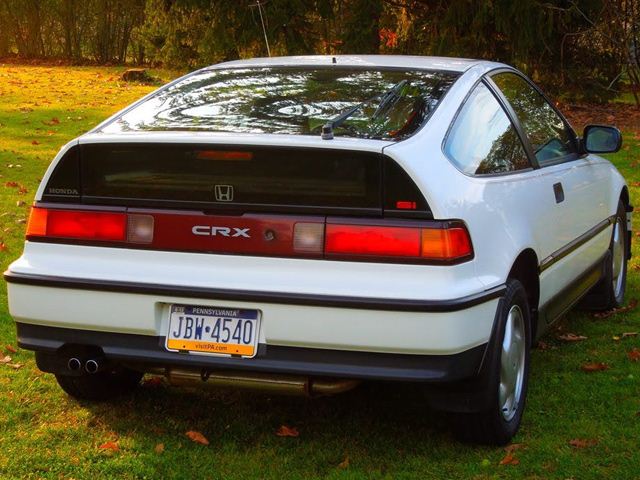
You would think Honda has been quietly seething about the trash talk the enthusiast press has been heaping on its bland lineup of perfect cars for the past decade. You know, like: We want a CR-Z like that 1990 CRX. Could the Accord be any more boring? Why can't Honda bake a little excitement into the Civic along with all that reliability and ridiculous resale value? Even Consumer Reports went off on Honda's brand-new 2012 Civic, calling the interior "dismal" and pulling its coveted "Recommended" rating. Whoa.  

We don't like boring cars at Automobile Magazine. But here's a shot of reality: Times have been tough. Honda saw a recession coming and pulled in the reins on frivolity when it designed the subdued 2012 Civic. "We thought the market would be more value driven," explains American Honda executive VP John Mendel. "It has been, but not at the cost of content."

Well, of course not! We're Americans, for heaven's sake. But was the 2012 Civic really a mistake? Honda had a jazzy redesign in the works soon after its introduction. Before it could act, Consumer Reports struck. Yet Honda sold 317,909 "dismal" Civics in 2012, making it the third-best-selling car in the U.S. The Accord (you know, the previous stodgy one) was the second-best seller at 331,872. The CR-V was the best-selling SUV/crossover at 281,652. We should know in our hearts that when times are tough, Americans buy Hondas.  

Says Mendel: "Here's the conundrum for any mass-market brand building three vehicles that each sell 300,000 examples a year. You have to be edgy yet not offensive. It's like a red suit; you say, 'Wow! But it's not for me.' The number-one ice cream sold in the world is still vanilla. It's horrible to say, I suppose, but you can't be so polarizing. It's a nightmare for designers and engineers. We want to be fun, yet we want to be safe, but we also want to be out there. 

"It tweaks me when I read that Honda has lost its way. No one sweats what the customer thinks more than we do. An old friend at Ford used to say that at the end of the day, you have to pass the pub test. You throw your keys on the bar. When you do and people see them, you don't have to explain yourself. Honda has always passed that test."  

Still, the 1990s were the end of hot Hondas as we knew them. That's when chief engineer Nobuhiko Kawamoto, the brilliant father of the world's first aluminum production car, the 1991 Acura NSX, became president and, sadly, transferred control from the wild-eyed engineers to the responsible manufacturing and marketing guys. Although he had been a racing mechanic himself, he pulled Honda out of Formula 1. By doing so, Kawamoto saved his company from the serious threat of a takeover by Mitsubishi Motors (imagine that). Honda then got down to the business of building sensible Civics and Accords with a vengeance. Mister Kawamoto retired in 1998, and we still miss talking with him. 

Fortunately, the racing heads in the company did not go away. In 1993 they became Honda Performance Development, keeping the pilot light burning as a subsidiary of American Honda. Now, on the eve of the Acura NSX's return to production, it is fitting that the HPD guys might be building the successor to the CRX of our dreams -- a hot CR-Z very much like the HPD concept we spied at the 2012 SEMA show in Las Vegas. The concept has a 185-hp, supercharged four-cylinder engine, a sport suspension, a trick exhaust, big brakes, and eighteen-inch wheels. These HPD guys have pretty good credentials: since 2006, some ninety-eight IndyCar drivers have done business with HPD-prepared racing engines and have completed more than a million miles of practice, qualifying, and racing with only six in-race engine failures.  

You may want to begin a letter-writing campaign to Honda and put the hot CR-Z on your wish list. Meanwhile, there might be another Honda you can fall in love with. We have driven the new 2013 Honda Accord, and it is magnificent. Two weeks ago, most of the staff abandoned the office for a unique, bracketed, head-to-head test of eight mid-size cars, arguably the finest group of family sedans ever on the market at one time. Go to automobilemag.com or download our May iPad issue to read the report. I will tell you one thing: the 2013 Honda Accord blew everyone away. It's been a long time coming.

Source;


, , , , , , ,

Honda Cars : Honda History: Car Buzz - Unearthed: 1991 Honda CRX Si | 2013 New Honda Car Reviews 0

Unknown | 8:07 AM
Honda History
Honda History

by Jay Traugott of www.carbuzz.com
 
A completely original example of one of the best models Honda has ever built is now up for sale. 
 
There was a time when Honda was considered a rebel in the automotive industry. It didn’t always play by the rules established by larger automakers. Those companies often felt that when it came to cars, bigger was always better. Instead, Honda designed small and medium-sized cars that were very reliable, had solid power outputs from smaller engines, and were a hoot to drive. Today it is claimed, and rightly so, that Honda has lost some of its former magic in its quest to go more mainstream.

While we hope Honda one day manages to rediscover its roots, there was a time when it built one of the best all-around small hatches on the market. It needs little to no introduction but the Honda CRX is unquestionably one of the Japanese marque's finest models. First launched in the US in 1983, the CRX was powered by a 1.3-liter inline-four with just 58 horsepower, which was soon upgraded to 1.5-liters with around 75 hp. But what was truly incredible was its fuel economy numbers. The US-spec CRX HF (High Fuel economy) returned 41 mpg city and 50 mpg highway – and this was more than a decade before the first hybrids began to appear.


On top of this, the CRX was still wicked fun to drive thanks to that peppy engine and five-speed manual gearbox. The second-gen model launched in 1988 and while its exterior design wasn’t all that dramatically different, Honda made some major changes under the skin. For starters, the CRX switched to a full independent wishbone suspension and fuel injection engines, which ranged from 1.5 to 1.6 liters. Outside of the US, however, Honda offered buyers an optional 1.6-liter VTEC inline-four that was good for 150 hp. The CRX was only the second Honda model to receive a VTEC engine; the Acura Integra came first.
The very fact Honda had the balls to put such an advanced and powerful engine in a small and unfriendly family car, even if it was overseas, says a lot about its rebelliousness. Try to picture an American automaker at that time, take Chevy for example, putting a state-of-the-art, fuel efficient high-output four-pot in the old Cavalier three-door hatchback: That car had a choice of two thirsty and uninspiring four-cylinders and a V6 option. US buyers could also opt for the CRX Si, which came with a 1.6-liter unit that eventually produced up to 108 horsepower and was mated to a five-speed manual.

A third-generation CRX came in 1992, but it was officially called the Civic del Sol. Silly name aside, it featured a targa top roof and wasn’t met with the same enthusiasm amongst fans as the first two gen models were. In 1997 however, the del Sol was discontinued, thereby ending the CRX lineage. Honda tried to pass off the current CRZ hybrid as the spiritual successor to the old CRX but that car simply failed to capture the spirit of the original, despite it being the first hybrid to offer a manual gearbox. Today, the CRX still has a loyal following with many owners driving their cars with minimal mechanical problems.

This 1991 CRX Si that’s currently up for sale on eBay has just 39,000 miles on the clock and is completely original with no modifications. Power comes from that wonderful naturally-aspirated 1.6-liter inline-four mated to a five-speed manual. The car’s second and current owner bought it from its original eighty-year-old owner around a year ago and has kept it in pristine shape. It comes with the original owner’s and service manuals as well as an unused jack, spare and toolkit. As of writing, the top bid was $12,100 so it’s clear that people are willing to pay a solid amount for an all-original CRX in top condition.
 
Source: cgi.ebay.com
 
Source;


, , , , , , , ,

Honda Cars : Truth About Cars: Generation Why: What’s Eating Soichiro Honda? | 2013 New Honda Car Reviews 0

Unknown | 6:59 AM
Honda History
Honda History

The man himself....
By Derek Kreindler of www.truthaboutcars.com
One of the most enduring narratives in the past few years has been the idea that somehow, Honda has lost it’s way. The maker of affordable, high-quality and fun to drive cars had suddenly become a purveyor of bland appliances that were the furthest thing from what they built their name on.


I’d argue that those who only focus on the loss of the Integra Type-R, the S2000 and the double wishbone suspension are taking a short-sighted view of Honda as a company. If anything, they are carrying on in exactly the same manner as they always have – it’s just that they haven’t adapted to the unprecedented shifts that have occurred in the post-bailout car market.

To understand Honda, you have to look step outside the enthusiast lore of Soichiro Honda, VTEC engines and Formula 1. Honda is, above and beyond everything else, the iconoclast in the Japanese market, the small company with an international mindshare belying that size. Soichiro Honda, the legendary namesake founder, was something of a rebel, having little time for the stifling conformity of post-WWII Japan. The Japanese government attempted to merge Honda with a number of smaller auto makers and stop them from exporting their cars to the states – a move Soichiro successfully fought, that led to the company being given permission to export their wares to America. Ever since, Soichiro’s unconventional views have defined the company.

Key among these is an unshakable conviction – some would say bordering on arrogance – that whatever Honda does is the right way, the only way to do things. View things through this lens, and a lot of their decisions begin to make sense. Why introduce a V6 Accord when the 4-cylinder model was selling in huge volumes and offered a superior driving experience? Why give Acura a V8 engine when Honda’s V6 was just as powerful and more efficient to boot? Why introduce a minivan when the Accord wagon was sufficient? And when we do, why not give it conventionally hinged doors and a 4-cylinder engine? This philosophy is summed up perfectly by Soichiro himself: “We do not make something because the demand, the market is there. With our technology, we can create the demand, we can create the market.”

From 1973 until the turn of the millennium  Honda’s convictions served them well. They rode wave after wave of success in America, selling every single car they could make, winning accolade after accolade, avoiding the recalls and scandals that plagued their competitors. If one subscribes to the narrative popular with us gearheads, then the mid-2000s are the start of Honda’s decline into beigeland. But this is a narrow-minded view that has little grounding in reality. Sales of Honda’s core products – the Accord, CR-V and Civic – have been exceptionally strong on a consistent basis. The CR-V, a vehicle so boring that even my own mother admitted that it was a dull drive, is the best example of how Honda’s ingenuity is far from dead. The little features, like the knee-high cargo floor, the multi-angle backup camera and the one-touch rear folding seats, are what the other 99.9 percent of buyers care about. Honda knows what side their bread is buttered on. But these days, Honda’s innovation and engineering skill manifest themselves in the Fit’s Magic Seat rather than the Prelude’s 4WS system.

So what about us? What about the people who yearn for something that’s exciting to drive and look at? Here, Honda’s legendary adherence to their convictions starts to border on arrogance. Having long believed in environmental stewardship before it was trendy (think 4-cylinder engines, light weight and the S2000 having LEV certification), Honda foisted upon us cars like the CR-Z.  Substantial tax breaks on hybrid cars in Japan created a situation where the rest of the world was forced to accept this oddball product. The fact that nobody wanted the car was immaterial. Honda felt that was the right thing to do, and that they could create a market for it.

This strategy may have worked in previous eras, but Honda wasn’t prepared for a fundamental shift in the car market – they no longer had a monopoly on good cars. Pick up a car magazine from a decade ago, and there was a clear stratification in commodity segments like the compact and mid-size segments. Back then, mentioning the Kia Optima and the Honda Accord in the same breath would have been a farcical notion. Ditto the Cavalier and the Civic. Now, one could make the case that the Optima and the Cruze are equal to their Honda counterparts, something that would have been previously unthinkable. The democratization of quality wiped out much of Honda’s competitive advantage.

Ironically, the 2012 Civic might be our best hope for a change in Honda’s attitude. Despite being a perennial whipping boy among the enthusiast press, the Civic sold in astonishing volumes. Even though it took substantial incentives and lease deals to move units, the Civic destroyed the competition, outselling the Toyota Corolla/Matrix (for sales ranking purposes, they count as one) by nearly 27,000 units. With 317,909 Civics sold in 2012, Honda beat Mazda’s entire sales total with one model alone.

If this were any other era Honda -the Honda of old, the one that retained CVCC long after catalytic converters had become old tech, the one that built a brand new factory for its all-aluminum, hand-built supercar –  would have given the press a giant middle finger and continued to pump these cars out. But they didn’t, because things are different now. They re-grouped, admitted they made a bad bet and tweaked the car after just over a year on the market. In the conservative, risk-averse culture of Honda that prizes saving face above all else, this is tantamount to an admission of gross incompetence. It may not be what we were hoping for, but the first step to fixing things is admitting that you have a problem.

Source;
 http://www.thetruthaboutcars.com/2013/02/generation-why-whats-eating-soichiro-honda/


, , , , , , ,

Honda Cars : CarBUZZ.com: Japanese Tuning Icons Part 2: Honda Prelude | 2013 New Honda Car Reviews 0

Unknown | 8:42 PM
Honda History
Honda History

Bring back the Prelude....Bring back the Prelude....Bring back the Prelude....
The Prelude was an excellent sports car from day one. It's too bad Honda couldn't find a permanent place for it in the model lineup. 
 
The Honda Prelude was the car which put Honda on the performance map before the tuning floodgates would even open. Its long hood gave it a look sort of like a scaled-down muscle car, and the well-balanced car was enjoyable to drive even in stock form. The Prelude was also quite an easy car to modify, and as a model which had been intended as a performance car from the outset, the aftermarket community gave it quite a bit of attention.
 
The Prelude first debuted in 1978 as a 1979 model. In Japan it was available only through Honda's "Verno" dealerships, a more youth-oriented sales channel, similar to Toyota's North American Scion brand of today. The car was based heavily on the Accord sedan, but with pony car-esque styling to make it competitive with Toyota's recently-introduced Celica. The 1.6-liter engine came from Accord and produced 72 horsepower, earning it the nickname "Honda Quaalude" upon its debut in the US from those expecting a car with this kind of styling to produce more power. 
 
Improvements to the emissions control system would improve things in 1980, and then the second generation of the car would debut in 1983 with more power. But it was the third-gen Prelude, introduced in 1988 where the car would really come into its own. The B20 engine was now considerably more powerful, and in Si trim, the Prelude now had nearly double the horsepower offered when it was introduced a decade before. Handling was excellent as well, and when Road & Track did a slalom test of the 1988 Prelude Si, it beat every other car that year, including some seriously exotic European models.
 
Though the third generation might have been the point when Honda's work on the Prelude really stepped up, it is the fourth generation which tuners really became interested in. Introduced in 1991 in Japan and 1992 in North America, the fourth-gen Prelude finally abandoned the B-series engine in favor of either an F22, H22 or H23 engine. The VTEC H-series engines are generally those favored by tuners for a number of reasons. The H22A1 produced 187 horsepower and 153 lb-ft of torque in stock trim, and offered better low-end torque than was typical in Honda's high-revving engines.
 
It was also soon discovered that the engine could handle more boost in stock form than was usually the case, and this was always good news. Significant gains could be achieved by getting the head flowed and ported, and while the head was off, it certainly didn't hurt to go ahead and put in a more aggressive cam as well. With some upgrades to the fuel system, a turbocharger could be added here as well, and with a strengthened and balanced bottom end, a much larger turbocharger could be added. Of course, this is still a front-wheel-drive car, and this more than the engine will ultimately limit the amount of usable power that you can squeeze out of the engine.
 
A fifth generation of the Prelude debuted in 1997, with boxier styling more reminiscent of the third-gen car. The H-series engine stayed, but now produced more power in stock form, and the Type-S was now up to 217 horsepower. But by this point the Prelude was being squeezed out of the lineup by the Civic Si on one side, the Accord Coupe on the other and the Acura RSX/Integra from above. It had become irrelevant and was killed off in 2001 after a massive drop off in sales. But the Prelude is one of those cars which got better with each generation, and never had to suffer the indignity of what happened to the poor Mitsubishi Eclipse.
 
Those looking for an old Prelude for some tuning work should probably just buy the newest one they can find. The fifth generation gives you the best starting point, although if you're going to be taking the whole engine apart anyway, a fourth-gen Prelude would probably work just as well. It should go without saying that you won't get the kind of performance out of this that you would from, say, a Toyota Supra. But the Prelude is also much cheaper, both to buy initially and to tune. Throw in that unbelievably good handling and you've got one of the best budget tuner cars around.
 
Source;
http://www.carbuzz.com/news/2012/12/10/Japanese-Tuning-Icons-Part-2-Honda-Prelude-7711971/


, , , , , ,
Unknown | 7:22 AM
Honda History
Honda History

For those of us that need English Subtitles, press the 'CC' button on the lower right tray.

A new Japanese commercial from Honda's corporate division attempts to show the passionate and innovative side of the company by displaying several products from its past, mainly focusing on cars but also including motorcycles and even agricultural machinery. 

Source;

http://carscoop.blogspot.com/2012/04/honda-dreams-its-future-through-its.html


, , , , , , ,

Honda Cars : 2012 Honda Civic "Heritage" Video feat. Dirty Vegas | 2013 New Honda Car Reviews 0

Unknown | 7:31 AM
Honda History
Honda History


, , , , , , , ,

Honda Cars : Honda takes green commitment to RP | 2013 New Honda Car Reviews 0

Unknown | 7:44 AM
Honda History
Honda History

Honda has undertaken worldwide efforts in protecting the environment and Honda Cars Philippines, Inc. (HCPI) carries the same green commitment.

In marking its 20th year of operations in the country this October, HCPI is celebrating 20 years of providing fun-to-drive and environment friendly vehicles.

Voltaire Gonzales, Vehicle Sales and Corporate Communications Head of HCPI, said there are over 239,200 Honda patrons in the country today.

HCPI recently staged a four-day exhibition during the 3rd Philippine international Motor Show held at the World Trade Center to highlight is commitment to preserve the environment. The exhibit theme was "Blue Skies for our Children."

Honda has taken conservation measures as early as 1960s. In 1966, Honda Motor Co., Ltd. Founder, Soichiro Honda once said, "Leave blue skies for our children." This has been Honda’s longstanding commitment for more than four decades now.

The display put up Honda’s ecologically sound technologies that remain true to its promise. It featured the latest in Honda’s roster of cars: the Honda City, Jazz, Civic, CR-V and Accord.
All powered by the ingenious i-VTEC engine, Honda vehicles make the most out of every drop of fuel by adjusting valve timing and valve opening combination to pump in fuel as needed only.

Apart from fuel efficiency, Honda vehicles are also engineered to release less harmful emissions.

Honda is the only local manufacturer that reaches EURO 4 levels for all its model line-up, even if Philippine regulations only mandate EURO 2 compliance. EURO 4 standards translate to approximately 56 percent reduction in harmful emissions as compared to EURO 2 standards.
To date, almost 82,000 Honda units with EURO 4 levels have already been sold and ply Philippine roads.

Lessons learned from the CVCC (Compound Vortex Controlled Combustion) engine technology, the first engine to meet the almost then impossible emission standards of the 1970 US Clean Air Act, have paved the way in the development of Honda’s new products and technologies which set the standard in mobility and environmental conservation.

In improving fuel efficiency and reducing carbon footprint, Honda recognizes hybrid as the most practical technology at the moment. Honda’s original Insight introduced in 1999 was the first gasoline-electric car sold in the US.

Using Integrated Motor Assist (IMA) technology, the gasoline engine serves as the main power source of the vehicle while the electric motor provides additional power as needed. Thereafter, other gasoline-electric powered models soon emerged like the Civic Hybrid and Accord Hybrid.

Last year, Honda introduced the all-new Insight. Boasting excellent fuel economy at an affordable price, the Insight is designed to pass on hybrid technology to the mass market. A year after, the CR-Z model was launched in Japan.

Source;
http://www.malaya.com.ph/08312010/auto2.html


, , , , , , ,

Honda Cars : Honda 2010 Digital FactBook | 2013 New Honda Car Reviews 0

Unknown | 6:49 AM
Honda History
Honda History

05/17/2010 - Torrance, CA -
The 2010 Digital FactBook is an annual report which provides an overview of Honda's global operations as well as detailed historical and up-to-date information concerning Honda's sales, manufacturing and R&D operations in North America. This report includes a general chronology which highlights the significant milestones in Honda's corporate history.

The 2010 Digital FactBook includes the following:
-Corporate directory of key locations and contacts by region
-Overview of worldwide operations, sales network and 2008 production
-Overview of North America (N.A.) operations and subsidiaries
-History of Honda/Acura vehicle introductions in the U.S., Honda/Acura vehicle and industry sales data for N.A.
-List of N.A. manufacturing facilities and information on automobile, motorcycle and ATV/PWC production
-Summary of N.A. R&D/Engineering facilities
-Summary of exports of N.A. made Honda products
-Overview of South America operations, subsidiaries, manufacturing facilities and R&D centers
-Overview of Europe/Middle East/Africa operations, subsidiaries and manufacturing facilities
-Overview of Japan operations, subsidiaries, R&D centers and manufacturing facilities
-Overview of Asia/Oceania operations, subsidiaries and manufacturing facilities
-Overview of China operations, subsidiaries and manufacturing facilities
-Chronology of corporate milestones
Here is a link to the fact book in pdf format;


, , , , ,

Honda Cars : NY Times: Honda’s Cache, Private for Now | 2013 New Honda Car Reviews 0

Unknown | 7:48 AM
Honda History
Honda History

UNSEEN In an unmarked warehouse, American Honda has a small collection of production models and racecars that have been part of its history in the United States
The collection includes an N600, the first Honda car sold in the United States, arriving in Hawaii in 1969 and on the mainland a year later. Americans didn't warm to the tiny dimensions and wimpy 599 cc engine of the N600, but the car has still earned a place in the company's holdings.

The dream of someday being able to showcase these vehicles is at least a year or two away from becoming reality. One of the questions that American Honda officials will face at that point is which vehicles to display.
A cutaway of the Honda Insight is displayed in front of a collection of other famed Honda powerplants.
The 1999 Honda Sprocket concept is one of about a half dozen former auto show design studies on display.
A selection of Honda's early bikes is just a tip of the iceberg. Many more are stored on the other side of the rear wall.
There is also a replica of Honda's first American headquarters, which opened in 1959 in Los Angeles.
A 1997 Honda EV Plus, one of about 340 produced in the late 1990s.
Along one wall are Honda racecars from the IndyCar series.
AMERICAN HONDA does not have a corporate museum in the United States — not officially, anyway.

But there is a carefully considered collection of Hondas tucked away in a warehouse a few blocks from the company’s headquarters here.

The trove came to light several years ago when officials from the Rose Parade — Honda is a longtime sponsor of the New Year’s Day tradition in Pasadena — were invited to view a few of the more interesting models in the warehouse. A Honda executive from Japan wound up joining the tour of the collection.

Its cover was blown.

The collection was started by a former executive of American Honda, Tom Elliott, who had put aside a sampling of models important to the company’s United States history, said John Mendel.
“The problem was, we kept turning up more and more significant models that we couldn’t let go of,” said Mr. Mendel, who succeeded Mr. Elliott as American Honda’s executive vice president for sales. “We just kept parking them in this warehouse. We kept expanding the warehouse. Pretty soon, we just ran out of room.”

The collection has grown to several dozen vehicles, including Honda racecars from the IndyCar series, a selection of motorcycles and, more recently, early examples of a Honda-made generator and an outboard motor. At least that’s what Honda will admit to, although many more vehicles could be seen in storage farther back in the building when an informal lunch for journalists was held there.

While the collection is not open to the public — there is not even a sign on the building — the space is used for company meetings and events. The dream of someday being able to showcase these vehicles is at least a year or two away from becoming reality. One of the questions that American Honda officials will face at that point is which vehicles to display.

Certainly they’ll reserve a place of honor for the Honda 50, or Super Cub, a spindly motorcycle powered by a 50 cc engine. That was the first vehicle Honda marketed in the United States, soon after it incorporated in 1959 and established American headquarters on Pico Boulevard in Los Angeles. (A replica of that storefront has been created in the collection’s warehouse space.)
The Super Cub is still being produced; Honda says that 60 million Cubs have been produced, making it the best-selling vehicle of all time.

The Cub was followed by bikes like the dual-purpose 250 Scrambler, famous for tackling the Baja California peninsula of Mexico. And of course there would be a spot for the original 4-cylinder CB750, which helped establish Japan’s credibility as a maker of modern superbikes.
“A lot of people don’t remember that Honda was first a motorcycle company,” Mr. Mendel said.
“Cars didn’t come along until sometime later.”

The collection includes an N600, the first Honda car sold in the United States, arriving in Hawaii in 1969 and on the mainland a year later. Americans didn’t warm to the tiny dimensions and wimpy 599 cc engine of the N600, but the car has still earned a place in the company’s holdings.
“The N600 started it all,” Mr. Mendel said. “It was full of innovative ideas that were applied to later models.”
It wasn’t until 1973 that Honda car sales took off, when the first Civic was introduced. Since then there have been many best-sellers, as Honda has grown to become one of the world’s premier automobile manufacturers.
“It will be easy to know which of the early models to include,” Mr. Mendel said. “But there will be a lot of discussion about which of the later models should be in there.
“Everybody has a favorite,” he added. “Unfortunately, there won’t be room for all of them.”
Source;


, , , , , , , , , ,

Honda Cars : Canadian Driver: Honda Civic – 36 years in Canada | 2013 New Honda Car Reviews 0

Unknown | 6:53 AM
Honda History
Honda History

Alliston, Ontario, Honda Plant
By Paul Williams

While many vehicle models (and some manufacturers) come and go, the Honda Civic celebrates its 36th anniversary in Canada in 2009, where it has been an unequivocal success story.
The first year for Civic in Canada was 1973, with the company selling 747 1973 models here. Annual sales in Canada have risen to 72,463 Civics in 2008, at which time it was the best selling vehicle (cars or trucks) in the country. It was also the top-selling passenger car in Canada for the 11th consecutive year.
Another milestone, the five-millionth vehicle rolled off the assembly line at Honda Canada’s Alliston, Ontario manufacturing plant in April, 2009. Fittingly, it was a Honda Civic.
Honda Canada Manufacturing (HCM) has been a fixture in the Simcoe region of Ontario (about 100 kilometres north of Toronto) since 1986. It’s one of several Honda manufacturing facilities outside of Japan that the company has established over the past 30-plus years. It comprises two plants and a new engine manufacturing facility that opened in 2008.

Honda Canada Public Relations Manager Richard Jacobs says that even now, it comes as a surprise to many people that Honda Civics (both sedans and coupes) are built in Canada.
“And not only Civics,” he adds. HCM also builds the Acura MDX, CSX and ZDX, with 79 per cent of our output exported to the United States.”

Operating at full capacity, HCM builds 390,000 vehicles in Alliston annually, and 200,000 four-cylinder engines. In 2008 Honda was the second largest builder of combined cars and trucks in Canada, employing 4,500 Associates. The facility sources parts from 268 North American suppliers, of which 21 per cent are Canadian.

Visitors to HCM will immediately notice that plant associates (workers) all wear the same simple white uniforms (jacket and pants). In fact, every employee at HCM wears the uniform, including senior management (Jon Minto, Vice President of HCM, addressed our group our group of invited journalists while sporting the same corporate whites). The egalitarian theme extends to the parking lot, where there are no executive spaces, and to the cafeteria, which all employees use. Senior management, therefore, are regularly accessible to workers in the day-to-day operation of the plant.

On the shop floor, associates work in teams that perform a set of tasks as each vehicle moves along the assembly line. Team members rotate through the tasks every two weeks, which has the dual benefit of reducing boredom and increasing skills and experience.
Over the years, the vehicles that HCM manufactures have evolved dramatically. Back in 1973, for example, the Japan-built Honda Civic was powered by a four-cylinder, 1,200-cc engine that made 60 horsepower. The three-door hatchback car (there was no sedan) weighed a mere 640 kilograms and rode on 12-inch wheels.

By 1986, weight for the Civic Hatchback was up to around 800 kg, and the 1.5-litre engine made 90 horsepower.

At 1,200 kg, today’s Civic weighs almost twice as much as its 1973 ancestor, and is bigger in all dimensions than the (formerly) midsize Honda Accord of 1986. It uses a 1.8-litre four-cylinder engine that makes 140 hp and rides on 15-inch wheels (16 and 17-inch wheels are available). There is no Civic hatchback available in North America anymore, although auto writers look wistfully at the Type R GT 3-Door available in Europe, along with other interesting Civic variations that are not offered in Canada.

One thing that doesn’t seem to have changed is the design of those white uniforms. Functional as they may be, they appear to be the very same style as those worn by workers in Japanese plants 40 years ago. I think they could use an update.

Paul Williams is an Ottawa-based automotive writer and senior editor for CanadianDriver. He is a member of the Automobile Journalists Association of Canada (AJAC).
Source;


, , , , , , , ,

Honda Cars : Honda Tuning: 1965 Honda S600 Roadster - Vintage Level | 2013 New Honda Car Reviews 0

Unknown | 6:42 AM
Honda History
Honda History

Piecing Together Honda's History
By Rodrez
Photography by Rodrez
Scott King's '65 S600 Roadster & S600 Coupe
As most Honda enthusiasts know, in 1999 Honda introduced the S2000 convertible in celebration of their 50th anniversary. The sporty roadster created a worldwide buzz, with many calling it an instant classic. What many don't know is that Honda had already created a topless roadster, some 35 years earlier.

In the late '50s, it was the Japanese government that dictated which companies would be allowed to produce cars, as well as what types of cars they'd be able to build. Rather than compete with current automakers' model types, Soichiro Honda set out to create a car that would inspire a new demand for something different. His theory would prove invaluable, as it caused quite a stir when the S360 was finally introduced to Japanese dealers. Usually reserved for emergency vehicles, the new offering was unveiled in a bright red hue that demanded attention. Though the S360 was never put into production, its predecessor, the S500, was available for purchase in Japan. In 1964, the S600 Roadster went into full production, and was made available in Europe, Australia, and Canada. As with many great Hondas, the U.S. market would never see the S600.

The S600 Roadster
Scott King of Palm Springs, CA, has always been a Honda fan. In fact, his first car, a '72 N600, was one of the first Hondas ever available in the U.S. "When I was just a kid, my older brother's friend Greg spent a dollar on a raffle ticket and was the lucky winner of a brand new yellow N600. I was always fascinated by that car and continue to be to this day," he recalls. In May of 1995, King received word from a friend that a 1965 S600, in dire need of a full restoration, was calling his name from Pennsylvania. Most likely a Canadian model due to the left hand drive configuration, the car was quickly purchased, and it, along with all of its miscellaneous pieces strewn about in various sized boxes, was shipped to a friend's shop in New York. After some slight adjustments, the car fired up on the first try, even after being stored for over fourteen years. The car was shipped home to California where it would spend the next four years being painstakingly brought back to showroom condition. Parts had to be sourced through Honda gurus and newfound "S" friends that might offer a piece here, or a part there. In order to get into every nook and cranny, the chassis was separated from the body for the rebuild. Koni adjustable shocks replaced the outdated stockers, and while the body received a fresh white coat, the entire frame was expertly powdercoated.

With the exterior up to par, attention was turned to the daunting task of completing the interior. A previous owner had re-covered most of the cabin, and King felt that a red interior was the only option for this classic Honda. Right hand drive S600 dashes are scarce, and left hand drive S600 dashes are essentially non-existent. A specialist was hired to recreate the original dash and preserve the car's authentic feel. In late 2002, after years of searching, waiting, and countless hours of wrenching, King's '65 S600 was finally complete, and ready for the road. He adds "It's really hard to believe that this was once just a rusty heap. I had a lot of fun and frustration restoring the car, made a lot of new friends and learned many new things. But to be honest, I wouldn't say I was itching to start a similar project any time soon." Famous last words.

For the rest of the article, follow this link (more pic's too);
http://www.hondatuningmagazine.com/features/htup_0910_1965_honda_s600_roadster/japanese_classic_car.html


, , , , , , , , , ,

Honda Cars : Honda's 50th American Anniversary Video | 2013 New Honda Car Reviews 0

Unknown | 7:32 PM
Honda History
Honda History

Here's something that some of you might appreciate.


, , , , , ,

Honda Cars : Original Honda Beat Information | 2013 New Honda Car Reviews 0

Unknown | 7:38 AM
Honda History
Honda History

With all this talk about the Honda Beat making a 'comeback' (don't know if this car would be destined for North America or just Japan like the original), I thought I'd do some digging in to the Original Beat.
The Honda Beat is a small sportscar, that fits the regulations of a keicar. It is a convertible and has a midengine. The production began in May 1991 and finished in February 1996. The total number of cars produced was around 33,600. Most of the production (around 2/3) occurred in the first year, and then production and sales reduced drastically. There were two different models of Beat (PP1-100 and PP1-110), although there were a couple of different limited edition versions as well. Variations on the first model were just cosmetic updates. Only the second model had any real mechanical differences. All cars were offered with the option of a drivers-side airbag. In typical Honda Fashion, the Beat's engine did not utilize a turbocharger or supercharger. The 660 cc engine was modified with the MTREC system, which included one throttle valve for each of the 3 cylinders, to produce 64 horsepower (48 kW). Only manual transmission was available. The MTREC design will filter down to the 1993 Honda Today keicar. The Beat is part of a wave of keicar-sized sports cars in the late 80s -- its competitors included the Suzuki Cappuccino and Mazda's Autozam AZ-1. Together they predicted the arrival of the Smart Roadster over a decade later, while Japan wouldn't see a new model of the genre until the recent Daihatsu Copen.

Source;
http://www.hondabeat.dk/


, , , , , , , , , ,

Honda Cars : 3 Funny Honda Ads | 2013 New Honda Car Reviews 0

Unknown | 7:27 AM
Honda History
Honda History

This ad may be in bad taste but I couldn't resist.


, , , ,

Honda Cars : Some Honda History; 1969 - 1972 Honda N600 Coupe & Sedan | 2013 New Honda Car Reviews 0

Unknown | 7:20 AM
Honda History
Honda History

Canadian Driver just came out with an interesting article on the 1969 - 1972 Honda N600. I didn't know much about this car, so it's a good read.

Here's the link to the article;

The car even made it into the tv show C.H.I.P.S. Awesome.

And the dash still looks better than 40% of the cars out there.


, , ,

Honda History Honda History